Getting approved to publish is harder than writing the code. Account types, permissions, app review and audits for Instagram, TikTok, LinkedIn, YouTube, X and more, plus which platforms need no approval at all.
Every major social API meters you differently: requests per window, points per hour, quota units per day, or a daily post cap. Here is what each one actually allows, with the figures from their own docs.
Token lifetimes are where social publishing breaks. Authorization code flow, PKCE, refresh tokens and the specific reason you cannot store an access token for a post scheduled next week.
LangChain, CrewAI, the OpenAI Agents SDK, n8n and more, compared for one specific job: building an agent that actually publishes to social media. Includes the auth problem nobody warns you about.
Post to a Discord channel with a webhook URL and no bot, no OAuth and no approval. Working code for content, embeds and files, plus the 2,000 character limit and rate limit handling.
Telegram is the easiest social platform to publish to programmatically: no OAuth, no app review, no per-post fee. Here is how to post to a channel with the Bot API, with working code and the limits that apply.
X replaced its monthly API tiers with pay-per-usage credits. Creating a post costs $0.015, but a post containing a link costs $0.200. Here is the full price list and what a real posting schedule costs.
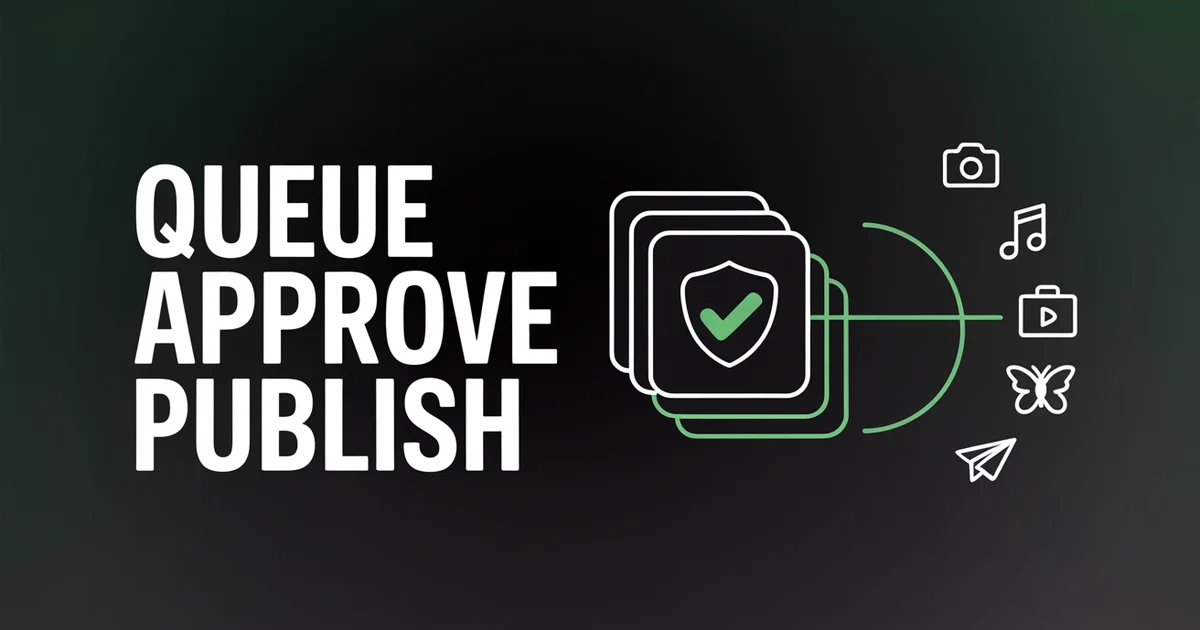
Three features shipped this week: a posting queue, a post approval workflow, and Owner, Admin and Member roles. Here is exactly what each one does, and the things we deliberately did not build.
Our iPhone app shipped this week. Here is what is in it, the architectural detail that decides whether a mobile scheduler is any good, and what it deliberately does not do.