Most "100 AI prompts" lists are unusable. They're flat, unsorted, full of generic templates that produce generic AI output. The problem isn't a shortage of prompts. It's that prompts without structure, without brand context, and without the right framework produce content that sounds like every other AI-generated post.
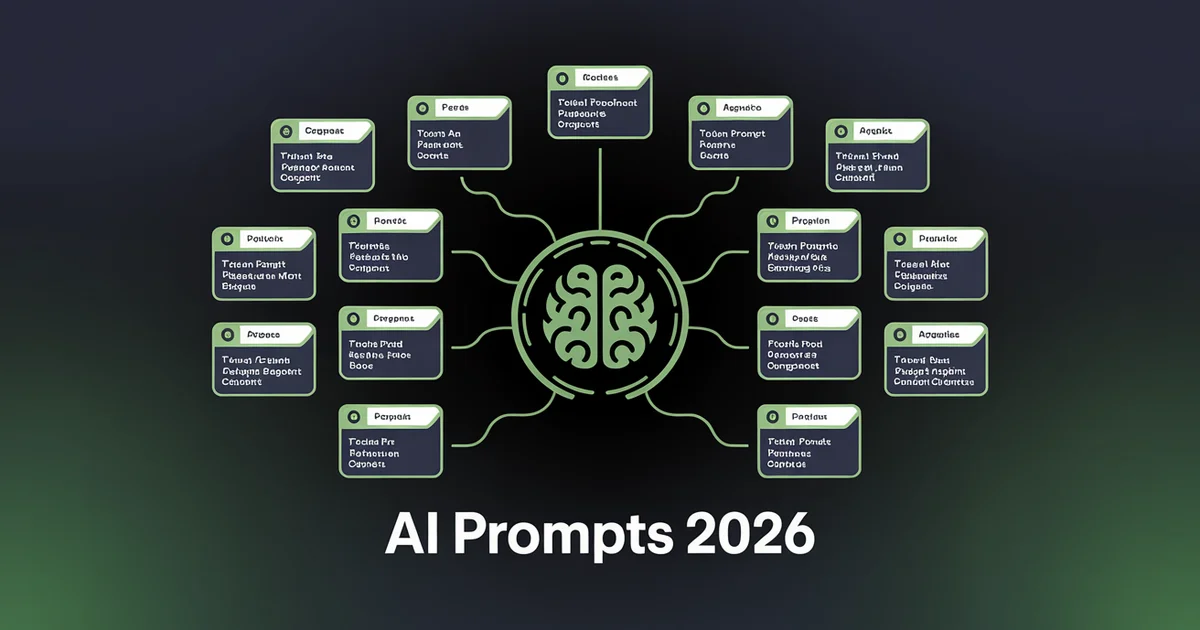
This library is different. 93 AI prompts for social media, organised three ways — by use case (12 categories), by platform (8 networks), and by which model handles each best. Plus the C-T-F-C framework that turns any prompt into a brand-fit prompt in 30 seconds.
Built for marketers using ChatGPT, Claude, Gemini, or the AI inside PostEverywhere's content generator. Copy the prompt, plug in your context, ship.
Generate captions, hooks, and posts inside the scheduler. PostEverywhere's AI content tools run these prompts natively — no copy-paste between tools. Start your 7 day free trial →
How this library is organised
Three ways to navigate, depending on what you're trying to do:
| If you want to... | Jump to |
|---|---|
| Solve a specific marketing job (caption, hook, hashtag, etc.) | By use case |
| Optimise for a specific platform | By platform |
| Pick the right model for the job | By model |
| Make any prompt actually work | The C-T-F-C framework |
The C-T-F-C framework (use this before every prompt)
The single biggest mistake people make: pasting a generic prompt and expecting brand-fit output. Generic prompt in = generic AI content out. Every prompt below works 10× better when you wrap it in C-T-F-C:
| Layer | What to include |
|---|---|
| C — Context | Who you are. What you sell. Your audience. Your brand voice (1-2 examples). |
| T — Task | What you want the AI to do. Be specific. |
| F — Format | Length, structure, tone, format constraints. |
| C — Constraints | What NOT to do. Banned words. Lengths. Things to avoid. |
Template you can copy:
<context>
I run [TYPE OF BUSINESS] for [AUDIENCE]. Our voice is [3 adjectives].
Brand voice example: "[paste 2-sentence example of your writing]"
</context>

<task>
[The actual prompt from the library below]
</task>

<format>
[Specific format requirements, e.g., "150 chars max, no emojis, ends in question"]
</format>

<constraints>
Avoid: cliches, generic marketing speak, the phrases ["..."], em-dashes for narrative pauses.
Don't include hashtags or links.
</constraints>
Claude is specifically trained to parse XML tags like <context> and <constraints> (Resonate, 2026), so this format works best for Claude. ChatGPT and Gemini also handle XML tags fine.
By use case (12 categories)
1. Caption writing (10 prompts)
Prompt 1 — High-engagement Instagram caption:
Write 5 Instagram caption options for [POST TOPIC]. Each must: (a) hook in the first 7 words, (b) deliver one specific insight, (c) end with a question that prompts a reply (not a like). Conversational tone. Max 150 characters before the "more" cutoff.
Prompt 2 — Story-driven caption:
Write a caption that tells a 4-sentence micro-story about [TOPIC]. Structure: tension → turn → insight → application. No "story time" framing. Max 80 words.
Prompt 3 — Educational caption:
Write a "did you know" caption about [TOPIC] for [AUDIENCE]. Include one surprising data point. Cite the source. End with a one-line takeaway. 60-100 words.
Prompt 4 — Carousel post intro caption:
Write a caption to introduce a 7-slide Instagram carousel about [TOPIC]. The caption should tease slide 1 without giving the conclusion, and tell readers explicitly what they'll learn.
Prompt 5 — Behind-the-scenes caption:
Write a behind-the-scenes caption for a photo showing [SUBJECT/ACTIVITY]. Make it feel personal and unguarded, not promotional. Reveal something most people wouldn't know about how this work happens.
Prompt 6 — Product launch caption:
Write 3 caption variations for launching [PRODUCT]. Variant A: founder-voice. Variant B: customer-focused (the problem it solves). Variant C: contrarian angle (challenges a common assumption in our niche).
Prompt 7 — UGC repost caption:
Write a caption to repost a customer's content about [PRODUCT]. Lead with their insight, credit them clearly, add one line of value. No "look how much they love us" framing.
Prompt 8 — Reels/TikTok caption (short):
Write a 5-15 word caption for a vertical video about [TOPIC]. Must work without watching the video. No emojis. No exclamation marks. Should make the reader curious enough to watch.
Prompt 9 — Twitter/X-style punchy caption:
Write a 240-character X post about [INSIGHT]. Punchline at the end. No hashtags. Format: setup → twist.
Prompt 10 — LinkedIn long-form caption:
Write a LinkedIn post about [LESSON LEARNED]. Structure: hook line → personal context (2 sentences) → the lesson (specific, with numbers if possible) → the principle (1 sentence) → ask. 200-300 words. First-person.
2. Content ideation (10 prompts)
Prompt 11 — Topic cluster generator:
I'm building a content cluster for [PARENT TOPIC]. Generate 12 specific blog post titles that would serve as spoke content, organised by funnel stage (4 TOFU, 4 MOFU, 4 BOFU). Each title should target a specific keyword variant.
Prompt 12 — Content calendar from theme:
Generate 30 social media post ideas for [INDUSTRY/NICHE] focused on the monthly theme of [THEME]. Mix formats: 30% educational, 30% behind-scenes, 20% UGC/community, 20% promotional. Tag each with optimal platform.
Prompt 13 — Hook variations:
I have a piece of content about [TOPIC]. Give me 10 different opening hooks that target different reader motivations: curiosity, contrarian, fear-of-missing-out, social proof, story, specific number, question, bold claim, problem, transformation.
Prompt 14 — Repurposing matrix:
I have one piece of content: [DESCRIBE IT]. Show me how to repurpose it into 8 different formats across 5 platforms. Include the specific angle for each format and platform pair.
Prompt 15 — Contrarian angle:
The common advice about [TOPIC] is [ADVICE]. Generate 5 contrarian takes that challenge this, each backed by a specific scenario where the common advice fails.
Prompt 16 — Industry-specific content ideas:
Generate 20 content ideas specifically for a [BUSINESS TYPE] targeting [SPECIFIC AUDIENCE SEGMENT]. Avoid generic "tips and tricks" framing. Each should have a clear angle.
Prompt 17 — Trend-jacking ideas:
The current trend in [INDUSTRY] is [TREND]. Generate 8 content angles that connect this trend to [OUR PRODUCT/SERVICE] without being forced or salesy.
Prompt 18 — Series concepts:
I want to start a content series. Generate 5 series concepts for [INDUSTRY/AUDIENCE], each with: format, posting frequency, 5 example episodes, and the long-term thesis.
Prompt 19 — Customer-question content:
Here are 5 questions my customers ask: [LIST]. Turn each into a content idea with: title, platform, format, and the unique angle that goes beyond just answering the question.
Prompt 20 — Comparison content:
Generate 10 "X vs Y" comparison post ideas for [NICHE]. Each comparison should be one most marketers haven't covered. Skip the obvious ones.
3. Hashtag research (6 prompts)
Prompt 21 — Niche-specific hashtag set:
For an Instagram post about [TOPIC] targeting [AUDIENCE], suggest 5 hashtag categories with 3 hashtags each: (a) niche (low-volume, high-intent), (b) industry, (c) topical, (d) audience, (e) branded. Include reach tier estimates.
Prompt 22 — TikTok hashtag strategy:
Suggest 3-5 hashtags for a TikTok about [TOPIC]. Avoid the over-used trending ones. Prioritise relevance over volume. Explain the strategy for each pick.
Prompt 23 — Hashtag competitor research:
Here are 10 hashtags my top competitor uses: [PASTE]. Analyse which are working (likely high engagement) vs which are vanity. Suggest 5 hashtags they're missing.
Prompt 24 — Branded hashtag generator:
Generate 5 branded hashtag options for [BRAND]. Each should be: short, memorable, on-brand, and unlikely to be used by others. Explain the logic for each.
Prompt 25 — Seasonal hashtag matching:
For posts in [MONTH/SEASON], suggest 15 hashtags that combine seasonal relevance with my niche of [NICHE]. Group by reach tier.
Prompt 26 — Hashtag audit:
Here's a hashtag set I've been using: [LIST]. Audit which are likely shadowbanned, which are over-saturated, and which still have low-competition opportunity in 2026.
4. Audience persona development (6 prompts)
Prompt 27 — Detailed buyer persona:
Build a detailed customer persona for [PRODUCT/SERVICE]. Include: demographics, day-in-the-life narrative, top 3 frustrations, what they Google at 11pm, what content they share, what they wish their tool did. Be specific and avoid generic personas.
Prompt 28 — Anti-persona:
Build the anti-persona for [PRODUCT] — the person we should NOT try to serve. Be specific about why our product would fail them.
Prompt 29 — Persona content preferences:
For this persona [PASTE PERSONA], generate: 3 content topics that would stop their scroll, 3 formats they prefer, the 3 platforms where they're most active, and the 3 emotional triggers that get them to engage.
Prompt 30 — Voice of customer extraction:
Here are 20 reviews/comments from my customers: [PASTE]. Extract: the 5 most repeated phrases, the 3 emotional triggers, the language they use to describe success, and the language they use to describe pain.
Prompt 31 — Persona-to-content map:
For each persona [LIST], generate a content theme map: top 5 topics, preferred format, optimal posting time, and the specific value-prop that resonates.
Prompt 32 — Segment messaging variation:
Take this caption: [PASTE]. Rewrite for 4 audience segments: [SEGMENT 1-4]. Keep the message but shift the framing, examples, and tone for each.
5. Ad copy variations (6 prompts)
Prompt 33 — Ad copy variations:
Write 5 ad copy variations for [PRODUCT/PROMO]. Each variation should test a different angle: pain-point, transformation, social proof, specific result, contrarian. Headline + body + CTA.
Prompt 34 — Hook A/B test set:
For [AD CAMPAIGN], write 10 hook variations to A/B test. Each must be under 7 words and use a different psychological lever (curiosity, fear, status, ease, urgency, specificity, contrarian, story-tease, social proof, scarcity).
Prompt 35 — Long-form ad copy:
Write a long-form ad caption (200 words) for [PRODUCT]. Structure: hook → problem agitation → mechanism (why our solution works) → proof → CTA. Conversational, not corporate.
Prompt 36 — Retargeting ad copy:
Write 3 retargeting ad variations for someone who visited [PAGE] but didn't convert. Each should address a different likely objection: price, trust, fit.
Prompt 37 — UGC-style ad caption:
Write a caption for a UGC-style ad featuring [SUBJECT]. Should feel like an organic recommendation, not a promotion. Include the specific transformation the customer experienced.
Prompt 38 — Comparison ad copy:
Write ad copy that positions [OUR PRODUCT] against [COMPETITOR] without being negative. Focus on a specific differentiator with proof.
6. Bio and profile copy (6 prompts)
Prompt 39 — Instagram bio variations:
Write 5 Instagram bio variations for [TYPE OF ACCOUNT]. Each ≤150 characters. Mix: status-focused, niche-focused, transformation-focused, contrarian, curious-question.
Prompt 40 — LinkedIn headline:
Write 5 LinkedIn headlines for [ROLE]. Each must do three jobs: state the position, signal the differentiator, and use 1-2 keywords for LinkedIn search.
Prompt 41 — TikTok bio:
Write a TikTok bio for [NICHE CREATOR]. Maximum 80 characters. Should be hook-y, hint at value, and include 1 emoji max.
Prompt 42 — X/Twitter bio:
Write 3 X bios for [TYPE OF ACCOUNT]. Each must signal: who I am, who I help, what I post about. Max 160 characters.
Prompt 43 — Channel description (YouTube/TikTok):
Write a 300-character channel description for [NICHE CREATOR]. Must clearly tell visitors: what they'll learn, why this channel vs others, posting cadence.
Prompt 44 — About page (cross-platform):
Write a 200-word About bio that works on LinkedIn, the company website, and as a Twitter pinned thread. Third person. Specific, not vague.
7. Comment responses (5 prompts)
Prompt 45 — Pinned engagement comment:
Write a pinned creator comment for a post about [TOPIC]. Should add context the post didn't fit, ask a sparking question, and naturally include the target keyword "[KEYWORD]".
Prompt 46 — Trolling response (de-escalate):
A commenter said: [PASTE]. Write 3 response options: (a) confident de-escalate, (b) humour deflect, (c) direct boundary. None should be defensive.
Prompt 47 — High-value comment converter:
Someone left a thoughtful comment: [PASTE]. Write a reply that: validates their point, adds one specific insight, and invites them to continue the conversation. Don't pitch.
Prompt 48 — Common-question response template:
Generate 10 question + answer pairs I can save as response templates for FAQ-style comments on my [NICHE] content.
Prompt 49 — Comment thread strategy:
Here's my latest post: [PASTE]. Write the first 3 comments I should make to seed productive discussion. Each should invite specific responses, not generic "thoughts?"
8. Crisis and response messaging (4 prompts)
Prompt 50 — Crisis statement draft:
[DESCRIBE SITUATION]. Draft a crisis response statement. Tone: direct, no corporate speak, takes accountability where due, lays out specific actions. 100-150 words.
Prompt 51 — Apology message:
Draft an apology for [SPECIFIC MISTAKE]. Acknowledge the harm specifically, explain what went wrong, state what we're doing about it, no excuses. 80-120 words.
Prompt 52 — Misinformation response:
[DESCRIBE THE MISINFO]. Write a response that addresses it directly, links to the truth, and doesn't amplify the false claim through repetition.
Prompt 53 — Account hack notification:
Write a "we're back" statement for an account that was just recovered after [DURATION]. Tone: light, transparent, doesn't dwell. Mention what we're doing to prevent recurrence.
9. Trend identification and analysis (4 prompts)
Prompt 54 — Trend hot-take generator:
The trend is [TREND]. Generate 5 hot-take angles I could post: agree-with-twist, polite-disagreement, specific-application, contrarian, predict-what's-next. Each ≤80 words.
Prompt 55 — Trend-to-content translator:
The trending topic is [TOPIC]. Translate it into 5 content ideas for my niche [NICHE]. Each must have a clear local-relevance angle.
Prompt 56 — Trend longevity assessment:
Trend: [DESCRIBE]. Forecast whether this is a 1-week, 1-month, or 1-year trend. Explain the reasoning and identify which content cycle would extract maximum value.
Prompt 57 — Cultural moment riff:
Cultural moment: [DESCRIBE]. Write 3 caption riffs that connect this to [OUR BRAND/NICHE] without being clumsy or opportunistic.
10. Content repurposing (6 prompts)
Prompt 58 — Long-form to short-form:
Here's my 2,000-word blog post: [PASTE/LINK]. Generate: 1 Instagram carousel script (7 slides), 1 TikTok video script (30 sec), 1 LinkedIn long-form post, 3 X tweet variations. Preserve the core insight in each.
Prompt 59 — Video to text:
I recorded a 5-minute video about [TOPIC]. Transcribed below: [PASTE]. Generate: 1 LinkedIn essay, 1 X thread (8-10 tweets), 1 blog post outline.
Prompt 60 — Podcast episode to social:
Podcast episode: [PASTE SHOW NOTES]. Generate: 5 quotable graphics text, 1 carousel script summarising key takeaways, 3 video clip ideas with the timestamps to use.
Prompt 61 — One topic, three formats:
Topic: [TOPIC]. Generate the same content in 3 formats: (a) educational (logical, structured), (b) narrative (story-based), (c) provocative (controversial-take). Same core point, different delivery.
Prompt 62 — Customer email to social:
Here's an email from a happy customer: [PASTE]. Turn it into: a UGC repost caption, a testimonial graphic text, and a case-study LinkedIn post.
Prompt 63 — Webinar to content series:
Webinar transcript: [PASTE]. Identify 5 content pieces that could spin off, each with: angle, format, platform, headline.
11. Competitor analysis (4 prompts)
Prompt 64 — Competitor content audit:
Here are 10 of my competitor's recent posts: [PASTE]. Identify: their posting patterns (frequency, themes), their highest-performing format, their voice signature, and 3 content gaps I could fill.
Prompt 65 — Differentiation strategy:
Here's my brand: [DESCRIBE]. Here are 3 competitors: [DESCRIBE]. Find 5 differentiation angles I can lean into. Each should be defensible and audience-relevant.
Prompt 66 — Counter-positioning:
My main competitor's positioning: [DESCRIBE]. Suggest 3 counter-positioning angles that frame their strength as a limitation, without being adversarial.
Prompt 67 — Competitor-killer content:
A competitor is dominant on [SPECIFIC KEYWORD/TOPIC]. Generate 5 content angles I could use to challenge their dominance — each should add value they're missing.
12. Performance review and reporting (4 prompts)
Prompt 68 — Monthly performance summary:
Here are my social metrics for the month: [PASTE]. Generate: a 1-paragraph summary, 3 specific wins, 2 areas to fix, and 3 hypotheses to test next month.
Prompt 69 — Post-mortem on a flop:
Here's a post that underperformed: [PASTE]. Compared to my baseline of [METRICS]. Diagnose why it underperformed. Be specific. Don't be generous.
Prompt 70 — Win pattern extraction:
Here are my top 10 best-performing posts of the last 90 days: [PASTE]. Identify the pattern. What do they share that my median posts lack? Be concrete.
Prompt 71 — Quarterly review:
Here's my Q[1-4] data: [PASTE]. Generate a quarterly review for stakeholders: 3 key wins, 2 failures, the strategic implication, and the Q[next] plan.
By platform (Instagram, TikTok, LinkedIn, and 5 more)
The same use case often needs platform-specific tweaks. Here are the top prompts per platform:
Instagram (top 3)
Prompt 72 — Reels script:
Write a 15-second Reels script about [TOPIC]. Structure: hook (3 sec) → setup (3 sec) → insight (5 sec) → CTA (4 sec). Include the spoken audio AND on-screen text overlays for each beat.
Prompt 73 — Story sequence:
Generate a 7-frame Instagram Stories sequence for [TOPIC]. Each frame should drive to the next. Include text overlays, sticker recommendations, and the final CTA.
Prompt 74 — Carousel script:
Write a 10-slide carousel for [TOPIC]. Slide 1: hook. Slides 2-8: one specific point each with text + supporting visual idea. Slide 9: summary. Slide 10: CTA.
For more on Instagram-specific optimisation, see our Instagram algorithm explainer.
TikTok (top 3)
Prompt 75 — TikTok hook with on-screen text:
Write a TikTok hook for [TOPIC]. Format: 1-line spoken hook + matching on-screen text overlay. Both should include the keyword "[KEYWORD]" for TikTok SEO.
Prompt 76 — TikTok narration script:
Write a 30-second TikTok narration for [TOPIC]. Conversational, not formal. Include 3 specific moments where on-screen text reinforces what's being said.
Prompt 77 — TikTok trend riff:
Current TikTok trend: [DESCRIBE]. Write a script that adapts this trend to my niche of [NICHE] without losing the trend's recognisability.
For the search optimisation side, see our deep dive on TikTok SEO.
LinkedIn (top 3)
Prompt 78 — LinkedIn long-form post:
Write a 250-word LinkedIn post about [LESSON/INSIGHT]. Structure: hook line → personal context → the specific lesson with numbers → the principle → an ask. First-person.
Prompt 79 — LinkedIn carousel/document:
Write a 10-page LinkedIn document carousel for [TOPIC]. Each page: clear headline + 1-2 sentences. Designed for swipe-through, not deep reading.
Prompt 80 — LinkedIn comment-as-content:
Write a 100-word LinkedIn comment I could post on a viral industry post about [TOPIC]. Should add value, not just say "great post". Position me as an expert without being self-promotional.
X / Twitter (top 3)
Prompt 81 — X thread (8-10 tweets):
Write an 8-tweet X thread on [TOPIC]. Tweet 1 = hook. Tweets 2-7 = one specific point each. Tweet 8 = synthesis + soft CTA. Each tweet under 280 chars. No emojis.
Prompt 82 — X quote-tweet hot take:
Here's a tweet to quote: [PASTE]. Write 3 quote-tweet variations: agree-and-extend, polite-pushback, contrarian-with-data.
Prompt 83 — X newsjack:
Breaking news: [DESCRIBE]. Write a tweet that connects this to my expertise in [NICHE] without being opportunistic. Should be the post a journalist would quote.
Facebook (top 3)
Prompt 84 — Facebook community-style post:
Write a Facebook post about [TOPIC] for a community-focused brand. Conversational. Open-ended question at the end to drive comments. 80-120 words.
Prompt 85 — Facebook Group seed post:
Write a discussion-prompt post for a [TYPE] Facebook Group. Should invite specific responses (not generic "thoughts?"), establish me as a contributing member, not a promoter.
Prompt 86 — Facebook Reels caption:
Write a caption for a Facebook Reel about [TOPIC]. Optimise for the 2026 unified Meta Reels environment (works for both FB and IG Reels).
YouTube (top 3)
Prompt 87 — YouTube long-form description:
Write a YouTube description for a video titled "[TITLE]". Include: hook paragraph, what the video covers, 3-5 timestamps, related video links, social links. Should rank for the target keyword "[KEYWORD]".
Prompt 88 — YouTube Shorts hook:
Write a YouTube Shorts script for [TOPIC]. 30 seconds max. Structure: hook (3 sec) → setup (5 sec) → payoff (17 sec) → CTA (5 sec). The hook must be the question or claim the algorithm needs.
Prompt 89 — YouTube chapter titles:
Here's my video transcript: [PASTE]. Generate 6-8 chapter titles with timestamps. Each title should be searchable, specific, and pique curiosity.
Threads (top 2)
Prompt 90 — Threads post (conversational):
Write a Threads post about [TOPIC]. Conversational, lower-stakes than LinkedIn, higher-thought than X. 80-200 words. Open-ended ending.
Prompt 91 — Threads reply ladder:
Initial Threads post: [PASTE]. Generate 3 follow-up posts that build on the original, each extending the thought.
Pinterest (top 2)
Prompt 92 — Pin description:
Write a Pinterest pin description for [TOPIC]. 200-300 characters. Should be keyword-rich for Pinterest search, descriptive of the image, and end with the value the user gets from clicking.
Prompt 93 — Multi-image / Video Pin script:
Write a 6-slide Pinterest multi-image Pin or Video Pin script for [TOPIC]. Visual + text per slide. End with a "save for later" CTA.
By model: which AI for which task
Based on testing the same prompts across the major 2026 models, here's where each excels for social media work:
| Task | Best model in 2026 | Why |
|---|---|---|
| Long-form captions (LinkedIn, FB) | Claude Opus 4.7 / Sonnet 4.6 | Strongest natural voice, less corporate (Resonate, 2026) |
| Short hooks (TikTok, Reels, X) | ChatGPT GPT-5.5 | Better at punchy, surprising formulations |
| Hashtag research | Either + WebSearch | Both need real-time data; the WebSearch tool matters more than the model |
| Voice-matching from examples | Claude Opus 4.7 | XML tag handling makes brand voice anchoring more reliable |
| Performance analysis / data interpretation | Gemini 3.1 Pro or Claude Opus 4.7 | Better at structured analytical reasoning |
| Creative ideation (volume) | ChatGPT GPT-5.5 | Higher diversity in 50-prompt generation |
| Creative ideation (depth) | Claude Opus 4.7 | Fewer but more developed ideas |
| Comment moderation drafts | Claude Sonnet 4.6 | Better nuance on tone gradient |
| Repurposing across formats | Claude Opus 4.7 | Better at preserving voice across format shifts |
| Trend analysis with real-time data | Perplexity (any tier) | Native search integration |
The general pattern across 2026: Claude wins on voice-sensitive work, ChatGPT wins on creative volume, Gemini wins on data interpretation, Perplexity wins when you need real-time research.
For more on choosing between models, see our model comparison for social marketers.
Use these prompts inside PostEverywhere's content tools. The AI content generator runs prompt-driven generation natively in the scheduler — no copy-paste between ChatGPT and your scheduling tool. See pricing →
How to actually use these effectively
Five operational principles that separate brands using AI prompts from brands using them well:
1. Always wrap in C-T-F-C. Generic prompt = generic output. Wrap in context + task + format + constraints every time.
2. Save your three best brand voice examples as a reusable preamble. Paste them at the top of every prompt session. Claude and ChatGPT both significantly improve voice match when given 2-3 reference examples.
3. Iterate, don't accept first output. Treat the first response as a draft. Push back: "make it sharper," "less corporate," "this paragraph doesn't earn its space — cut or replace."
4. Mix models for different stages. Use ChatGPT for brainstorming volume, then Claude for the final draft, then either for the polish. Same prompt + different model = different quality result.
5. Track which prompts work for you and which don't. Build a personal library. The prompts that work for one brand often need tweaking for another.
For more on the AI marketing stack, see our broader AI-for-social playbook.
Common mistakes
Five mistakes that turn a well-organised prompt library into mediocre content:
Pasting generic prompts without brand context. Generic in = generic out. C-T-F-C is non-negotiable.
Accepting the first output. First drafts from any model are 60-70% there. Push back and iterate.
Using the same prompt for every platform. The carousel prompt isn't a TikTok prompt. The Twitter prompt isn't a LinkedIn prompt. Platform-shift is real.
Mixing voices across a series. If you start a series in one voice, every post in that series should match. Test the voice with a 3-post sample before committing.
Using prompts to replace judgment, not augment it. AI generates options. You pick the right one. That choice is editorial taste, and it doesn't outsource well.
If you're stuck on what to post in the first place, our content ideation list for TikTok and platform-specific content calendars give you the topic side.
Tools that pair with this library
- PostEverywhere's AI content generator: run these prompts inside the scheduler, with brand voice memory across sessions.
- AI social media manager (PostEverywhere): the full bundle if you'd rather have one product handle prompting, scheduling, and reporting instead of three separate tabs.
- Hashtag finder: pair the hashtag prompts above with actual platform-specific suggestions.
- Our dedicated caption-tool roundup: if you want a purpose-built caption tool rather than running raw prompts.
One library, every platform, every model. PostEverywhere is the AI-native social media scheduler. Plans start at $9/mo. Start your 7 day free trial →
Frequently asked questions
What's the best AI for social media content in 2026?
It depends on the task. Claude Opus 4.7 wins on voice-sensitive long-form writing (LinkedIn essays, brand-voice captions). ChatGPT GPT-5.5 wins on creative volume and punchy short-form. Gemini 3.1 Pro wins on data interpretation. Perplexity wins when you need real-time research. Most marketers use 2-3 models for different stages of the workflow.
How do I make AI-generated social posts not sound like AI?
Three things. First, always use the C-T-F-C framework (context, task, format, constraints) — most "AI tone" comes from missing context. Second, paste 2-3 examples of your actual writing into the prompt so the AI can match your voice. Third, edit the first draft. AI output is rarely publish-ready on the first pass.
Are these prompts safe to use as-is?
Yes, but they work much better when customised. Every prompt in this library has placeholders like [TOPIC], [AUDIENCE], [NICHE]. Replace them with specifics, and wrap the whole prompt in your C-T-F-C context block. Generic prompt + generic context = generic output.
Will Google penalise AI-written social posts?
Google doesn't crawl your social posts directly (Twitter aside). What Google penalises is mass AI content on websites without human review or value-add. Social platforms have their own moderation but generally don't penalise AI content — they penalise low engagement, which AI content can be (when generic) or can avoid (when well-edited).
Which prompts should I save for daily use?
Probably 5-10 from this library, chosen for your specific workflow. Common daily-use prompts: Prompt 1 (Instagram caption), Prompt 11 (topic cluster), Prompt 21 (hashtag set), Prompt 45 (pinned comment), Prompt 58 (long-form to short-form repurposing). Save these in a personal prompt library you reach for every day.
How do I customise these for my brand voice?
Three steps. First, write a 3-sentence description of your voice (e.g., "Direct, no corporate-speak, one strong claim per paragraph, avoids stale openers"). Second, paste 2-3 examples of your best-performing posts. Third, list 5-10 phrases you'd never write. Put all three in the <context> block of every prompt.
What's the difference between using prompts in ChatGPT vs in PostEverywhere?
ChatGPT (or Claude, Gemini) is a general-purpose AI: great for raw generation, but you copy-paste output into your scheduling tool, unless you connect the two. PostEverywhere to ChatGPT, to Claude and to Gemini each take about two minutes, after which the assistant schedules what it just wrote. PostEverywhere's AI content generator runs prompts natively in the scheduler, with brand voice memory across sessions. The output goes straight to a scheduled post — no copy-paste between tools.
How often should I update my prompt library?
Quarterly. AI models change, platform features change, your audience changes. Review every 3 months: which prompts are still pulling their weight, which have become stale, what new use cases have emerged. The half-life of a prompt library is shorter than people assume.
Sources verified as of May 2026: Resonate — 100+ ChatGPT & Claude Prompts for Marketing (2026), Multilogin — 150+ ChatGPT Prompts for Social Media Growth 2026, Improvado — Claude vs ChatGPT vs Gemini for Marketing 2026, Multilogin — 150+ Claude Prompts for Social Media 2026, PromptAdvance — 77 Claude Prompts for Social Media (April 2026). Models and prompt techniques evolve — we update this library quarterly. For more, see our TikTok SEO guide, ChatGPT vs Claude vs Perplexity comparison, and best AI content creation tools roundup.

Founder & CEO of PostEverywhere. Writing about social media strategy, publishing workflows, and analytics that help brands grow faster.