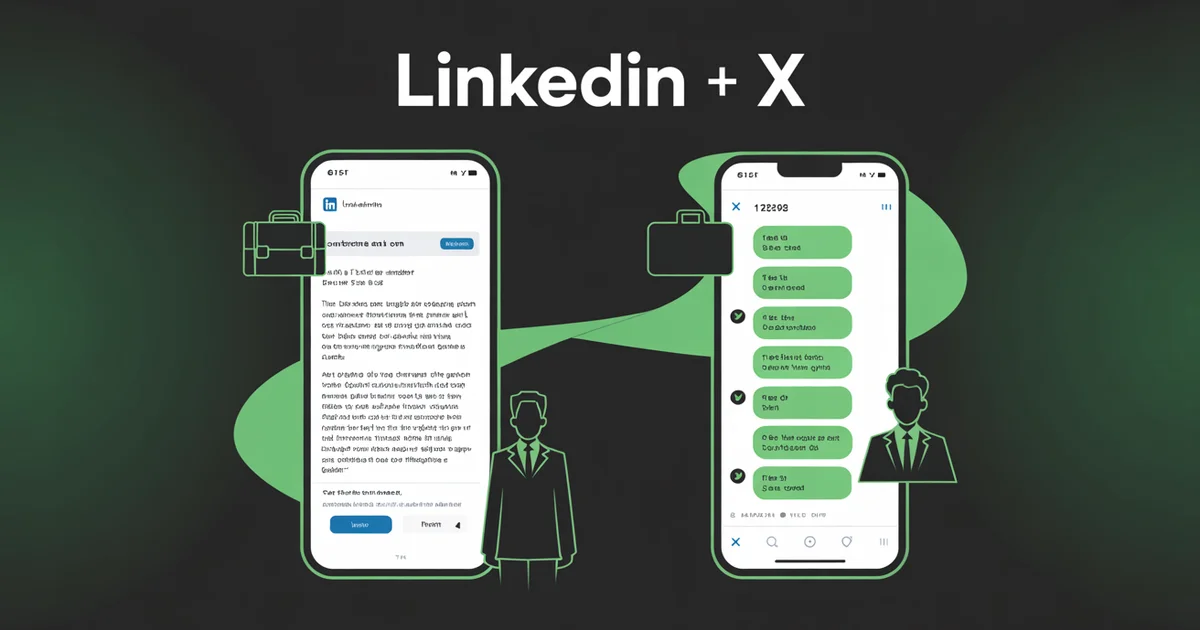
The post that gets you 50,000 LinkedIn impressions will die on X with 12 views. The X thread that gets quote-tweeted by a VC will look unhinged on LinkedIn.
If you've ever pasted the same B2B post into LinkedIn and X and watched one flatline, you've hit the central problem of B2B content distribution in 2026: two of the most professionally-overlapping audiences on the internet, two of the most tonally incompatible publishing surfaces. LinkedIn rewards 1,500-character considered monologues. X rewards 280-character punch. Same person, two opposite filters.
This piece covers what works (the X Premium reach gap, LinkedIn's 2026 link-penalty softening, the threading decision) and walks through the workflow that publishes to both without breaking either.
Edited by Jamie Partridge, Founder
We cover the four ways to publish everywhere at once separately.
TL;DR
- Don't paste. Translate. LinkedIn's 3,000-character ceiling and X's 280-character floor demand different drafts of the same idea, not one cropped twice.
- The X Premium reach gap is real. Buffer's 18.8M-post analysis found Premium accounts get roughly 10x more reach than non-Premium. Without Premium in 2026, you're shouting into the void.
- LinkedIn's link penalty has softened. Just Connecting's 2025 report shows links now give a 5% reach lift, but native still outperforms. Link-in-comments still wins for high-stakes posts.
- First-hour engagement decides everything on LinkedIn. 70% of total reach is decided in 60-90 minutes. X's window is 10 minutes.
- Schedule both from one composer, but write two posts. PostEverywhere gives you a per-platform editor with AI-assisted translation.
Stop pasting LinkedIn posts into X. PostEverywhere lets you write once, translate per platform, and schedule both at the optimal moment. Start your 7-day trial →
Why these two platforms are the hardest pair to cross-post
Most cross-posting failures are tonal, not technical. Posting Instagram to Facebook is a bug-avoidance problem; the content forms are similar enough that "post once, mirror" almost works. LinkedIn and X are the opposite problem.
The audience overlap is enormous. Per Content Marketing Institute's B2B research, 93% of B2B content marketers use LinkedIn for organic distribution and around 60% also use X. The same VP of Engineering who reads your LinkedIn post on the commute is on X during their afternoon Slack-procrastination window.
You're reaching the same person twice with two different costumes on.
The publishing physics are opposite. LinkedIn (per Richard van der Blom's Algorithm Insights Report 2025, a 1.8M-post analysis) rewards dwell time, comments, and considered long-form. X rewards velocity: replies in the first 10 minutes, quote-tweets, and a high reply-to-impression ratio.
The optimal LinkedIn post (1,300-2,500 characters per AuthoredUp's data) is 9-18x longer than a single X post.
Tone failure reads as cultural failure. A corporate LinkedIn-style "Excited to share..." opener gets ratioed on X. A punchy X-native take gets auto-categorised as "not serious" on LinkedIn. The right answer is never "post the same thing twice." It's "schedule the same idea, drafted natively, to both."
The character limits and what they do to your draft
| Platform | Standard | Extended | Cut-off in feed |
|---|---|---|---|
| 3,000 chars | 125,000 (Articles) | ~140 chars mobile, ~210 desktop ("...see more") | |
| X (free) | 280 chars | n/a | Full post visible; threads chain via reply |
| X Premium | 25,000 chars | $8/mo web, $11/mo iOS | Long posts collapse to ~280-char preview |
Per LinkedIn Help, the 3,000-character cap has held since 2017, about 500 words. X's 25,000-character Premium limit (Letter Counter's 2026 guide) shipped in 2023.
What matters more than the limits is cut-off behaviour. A LinkedIn post is judged on its first 140 mobile characters because that's what shows before "see more." On X, the 280-character post is the entire surface, with no "see more" to earn.
On threads, the first tweet is a fixed-cost decision: readers commit to the whole chain based on whether tweet 1 promises payoff. The same hook rarely serves both. LinkedIn hooks earn a click; X hooks earn a stop-scroll.
The 2026 link penalty: what changed
LinkedIn spent five years punishing external links, with reach cut 50%+, hence the "link in first comment" trick.
That's softened. Per Just Connecting's 2025 report, link posts now get a 5% reach gain. That's the first reversal in four years, post LinkedIn's 360Brew interest-graph rewrite (late 2025).
But native still wins on absolute reach, and link-in-comments still produces higher impressions for high-stakes posts.
X's link situation is harsher. Per Buffer and Postel, since March 2025 non-Premium link posts get near-zero engagement. X explicitly downranks tweets with URLs unless you're Premium, and even Premium link posts underperform thread-native content.
When the link does need to go out, sanity-check the card preview first, our Twitter Card validator confirms the og:image and meta tags are populating so you're not also losing CTR on top of the reach penalty.
Practical rule: If your LinkedIn post drives to a blog, your X version should be a thread that summarises the blog rather than a tweet that links to it. Thread first; the curious 5% click the link in the final tweet.
How to translate one B2B post into two formats
The translation rule: start with the thesis, not the draft. One sentence summarising the insight. Then draft the LinkedIn version (long-form, narrative, ends with a question) and the X version (punchy hook + thread) independently.
Worked example. Thesis: "Most SaaS sales teams misuse demo recordings; they treat them as objection training when they're actually qualification training."
The LinkedIn version (1,200 chars): opens with the claim, tells the story of an enablement lead pulling 30 lost deals and asking "what objection killed each one?", lands the reframe that objections are symptoms not causes, lists three diagnostic questions, ends with "what do others find?", designed to earn comments in the first hour.
The X thread (3 tweets): tweet 1, claim plus symptom-vs-cause reframe; tweet 2, three diagnostic questions stripped of context; tweet 3, "qualification gold, not objection gold" plus the call to watch your last 10 lost deals.
Same insight. Two drafts. The AI content generator inside PostEverywhere produces a first-pass translation either direction. The editorial work is tightening voice.
Threads vs single tweets vs Premium long-form
Three X options when cross-posting from LinkedIn:
- Single 280-character tweet. Highest reach ceiling, hardest to write. Works for declarative takes that fit in one breath.
- Thread (3-7 tweets). The default for B2B. Carries the argument while preserving X's punchy rhythm. Threads "double-charge" the algorithm: each tweet can rank, the thread gets aggregated engagement.
- X Premium long-form post (up to 25,000 chars). Looks like Substack inside a tweet. Buffer's data suggests these underperform threads of equivalent length. Use only when an argument truly won't break into thread beats.
For cross-posting from LinkedIn, threads almost always win. Translation rule: each LinkedIn paragraph becomes a thread tweet; the closing question becomes the final tweet.
The X (Twitter) Premium decision in 2026
Per Buffer's 18.8M-post analysis (Aug 2024 – Aug 2025), median impressions per post:
- Regular accounts: under 100
- Premium: ~600
- Premium+: 1,550+
That's 6-15x more reach for paid tiers. For a B2B operator, the $8/month Premium fee is rounding error against the impressions impact. The harder question is Premium+ ($40/month, or $33/month billed annually): worth it for accounts already pulling 1,000+ impressions organically; below that, the Premium to Premium+ lift is harder to justify.
The gap is widening, not shrinking. Social Media Today's report on Q1 2026 internal X data shows non-Premium reach has fallen another 30-40% YoY. If X is a B2B channel for you, the Premium decision is effectively made.
The first-hour problem (different on each platform)
Both algorithms decide a post's fate fast, but the windows differ.
LinkedIn: 60-90 minutes. Up to 70% of total reach is decided here per GrowLeads' 2026 analysis. Comments in the first hour weigh 15x more than likes; replying within 15 minutes triggers a 90% algorithmic boost.
X: 10 minutes. The For You algorithm decides amplification based on the first ~50 engagements, usually inside 10 minutes. After 30 minutes, an underperforming tweet is terminal.
Implication: you can only be present in comments on one platform in real time. LinkedIn rewards your presence more (15x comment weight, 90% quick-reply boost). X rewards a great hook at peak attention.
Practical workflow: schedule the LinkedIn post for the optimal window (Tue-Thu 8-10am local), schedule the X thread for its peak (Tue-Thu 9-11am local), engage with LinkedIn comments for the first 60 minutes, reply to X mentions opportunistically afterward.
The actual workflow, in 2-3 minutes
Here's how it works inside PostEverywhere.
Step 1: Connect both accounts
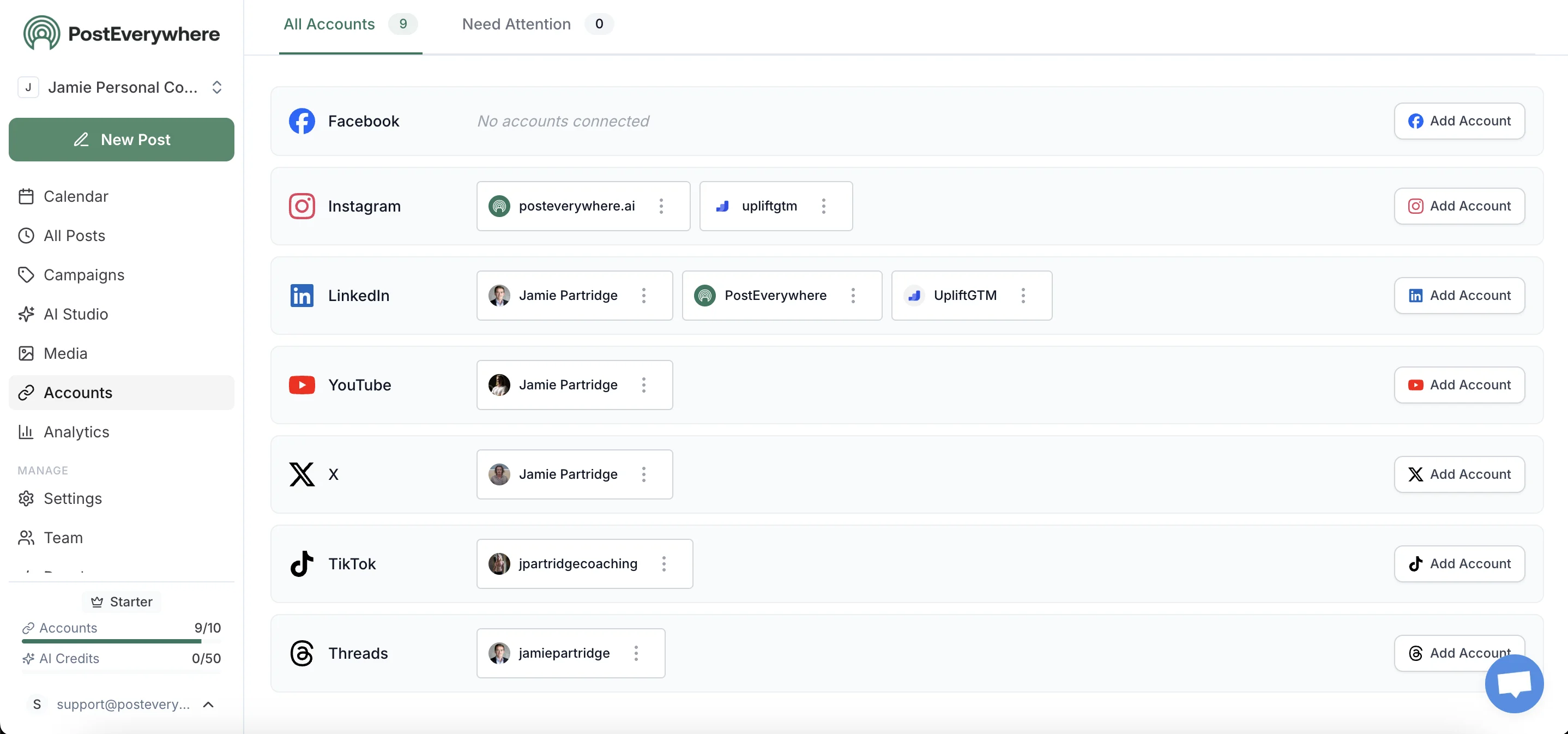
LinkedIn (personal profile or Company Page) and X (free or Premium) connect through their official APIs. LinkedIn's recent removal of its native X cross-post integration means a third-party scheduler is the only way to publish to both from one place. Multi-account management connects multiple LinkedIn pages or X handles for agency workflows.
Step 2: Draft once, translate per platform
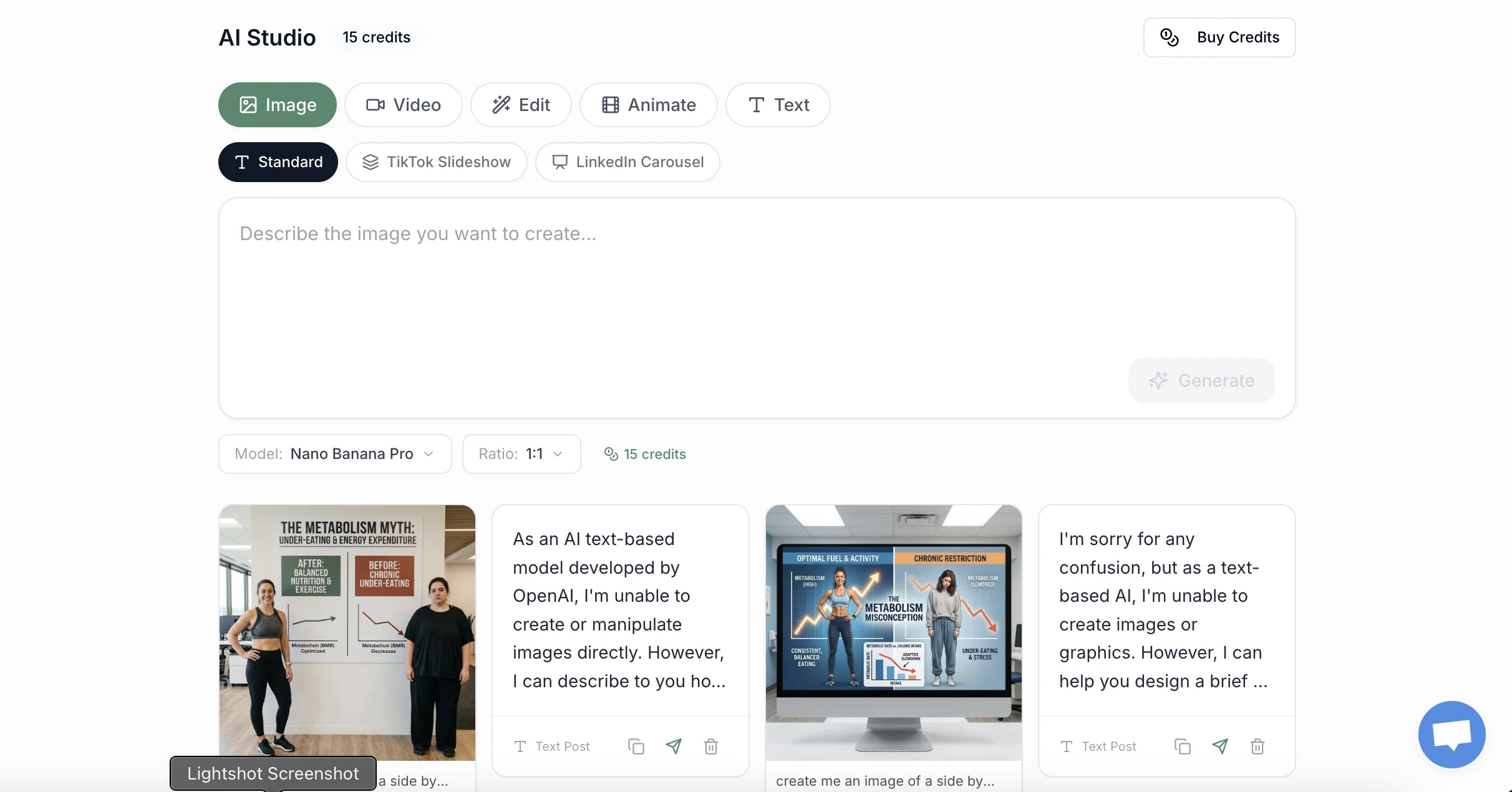
Open the composer. Type your thesis. The per-platform editor lets you write the LinkedIn version (1,300-2,500 character sweet spot) and the X version (single or threaded) side by side. AI Studio produces a first-pass translation, particularly useful for the X-thread-from-LinkedIn direction. You edit before publish.
Step 3: Use the bulk composer for thread chains
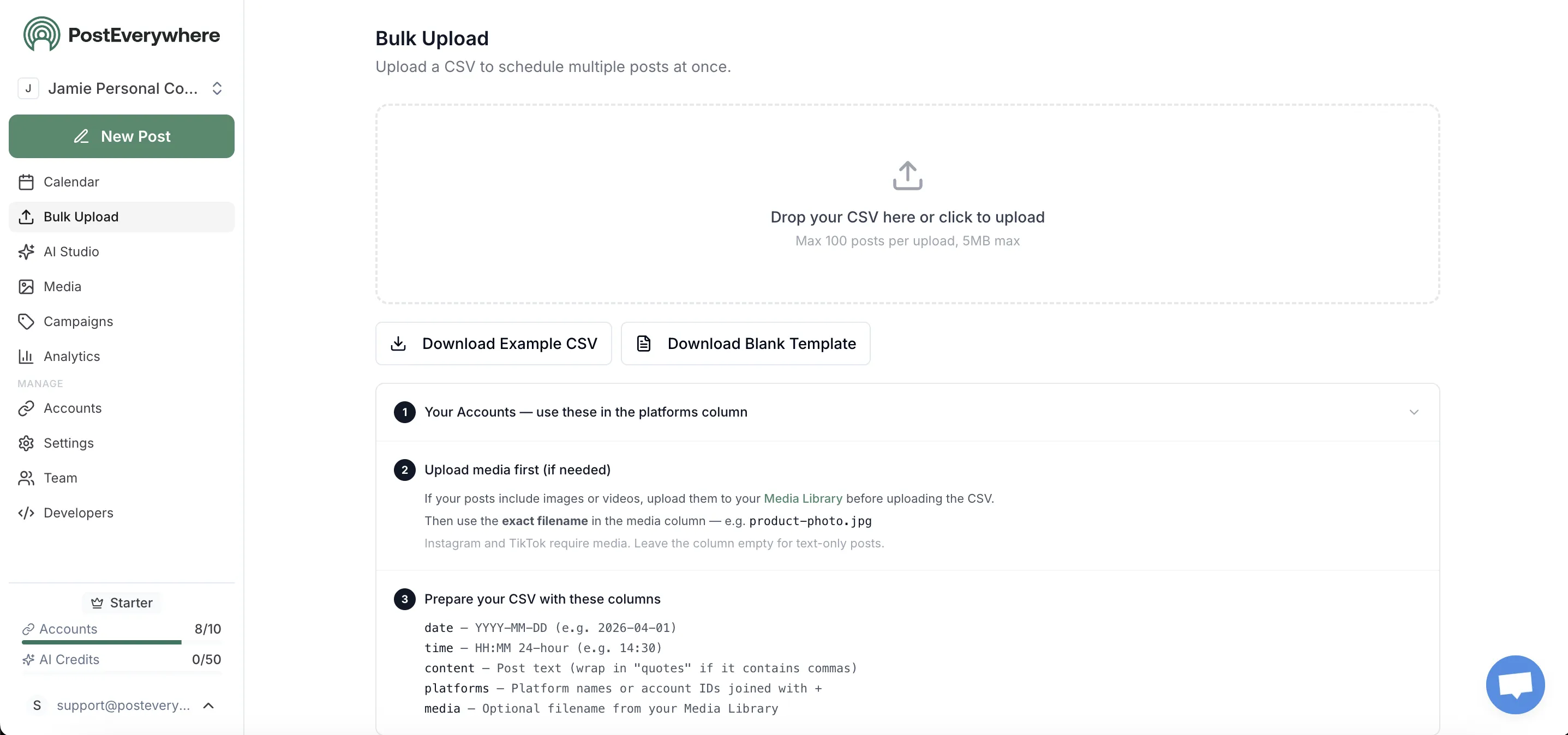
X threads are tricky in most schedulers because they need to chain replies. PostEverywhere's bulk composer treats a thread as a single unit. Write each tweet in sequence, drag to reorder, publish as a connected reply chain.
Per X's threading guide, threads must be posted as replies to the parent, which is what trips up DIY scheduling via Zapier or webhooks.
Step 4: Schedule for each platform's optimal moment

The calendar view shows both platforms' optimal windows side by side. Common B2B pattern: LinkedIn at 8:30am local (commute), X thread at 9:30am (at-desk). The best time to post analyzer reads your historical engagement to refine defaults.
For LinkedIn API scheduling, developer endpoints are also available.
Step 5: Track which platform actually drove pipeline
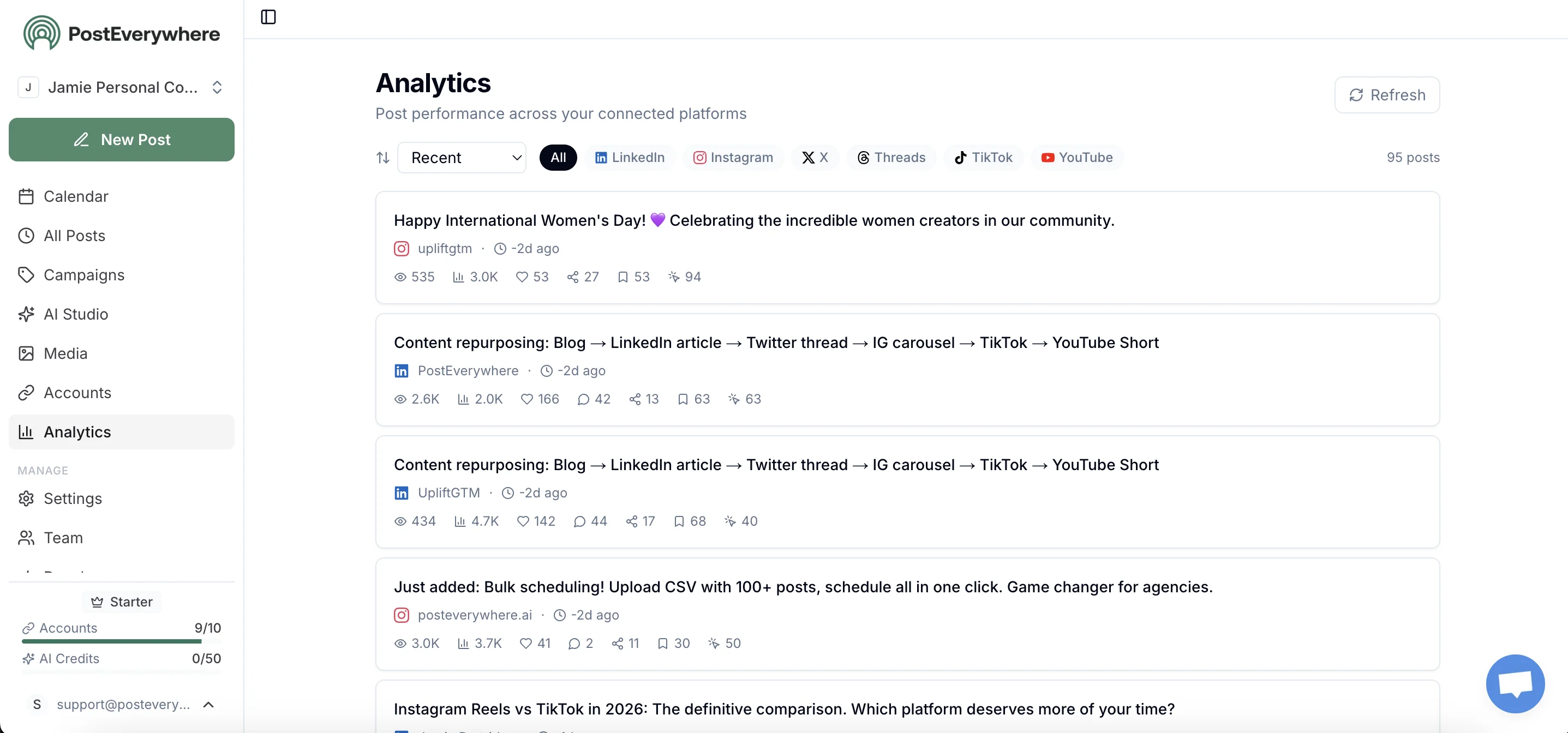
LinkedIn click-through is high but volume moderate. X volume can be 10x but click-through is lower. Per-platform analytics show impressions, engagement, and clicks per post per platform. Append UTM parameters from the free UTM builder to track which platform actually delivered to your CRM, not just which delivered impressions.
Stop choosing between LinkedIn and X. Schedule both in one workflow. PostEverywhere connects all top platforms with per-platform editors and AI translation. Start your 7-day trial →
Edge cases worth knowing
Company Page vs personal profile. Personal profiles get 5-7x more organic reach than Company Pages on identical content per van der Blom's report. Founders should post to their personal profile and have the company account share or comment.
Brands should post to both; the personal voice carries more weight.
Adding Threads to the mix. Threads skews 30% younger than X and trends consumer. For B2B, X + LinkedIn remains the highest-leverage pair. If you're already publishing both, adding Threads as a third copy of the X content is low-cost via cross-posting.
Link-in-comments still beats links-in-body for high-stakes posts. With the 2025 penalty softening, body links are fine for everyday content. For product launches or conversion-focused posts, schedule the link comment 30 to 60 seconds after publish.
X Premium beats LinkedIn Premium for publishing. LinkedIn Premium boosts InMail and search, not reach. X Premium boosts reach directly. Pay for X Premium first.
Frequently asked questions
Should I post the same content on LinkedIn and X at the same time?
Not the same draft. The same idea in two formats. LinkedIn rewards 1,300-2,500 character posts; X rewards 280-character punch or 3-7 tweet threads. Pasting a LinkedIn post into X gets ratioed; pasting an X thread into LinkedIn looks insubstantial.
Write a thesis, draft both natively, schedule both via a cross-posting tool.
Does LinkedIn still penalise external links in 2026?
Less than before. Just Connecting's 2025 report (1.8M posts) found posts with links now get a 5% reach lift, reversing four years of penalty. Native posts still outperform on absolute reach, so for high-stakes content the link-in-first-comment tactic still wins.
For everyday B2B posting, links in the body are fine.
Is X Premium worth it for B2B in 2026?
Almost always yes. Buffer's 18.8M-post analysis found Premium accounts get roughly 10x more reach than non-Premium (600 vs under 100 median impressions). The $8/month is the cheapest possible lift. Premium+ is worth it for accounts already pulling 1,000+ impressions organically.
Should my X post be a thread or a single tweet?
For cross-posted content, threads almost always outperform single tweets and X Premium long-form posts. They preserve X's punchy rhythm while carrying the longer argument from LinkedIn. Each tweet ranks independently and the thread gets aggregated engagement.
How do I schedule X threads alongside LinkedIn posts?
Most schedulers trip on threads because threads require reply-chaining. PostEverywhere's thread composer treats a thread as a single connected unit. Write each tweet, schedule once, and the tool handles the reply chain. You can schedule X posts including threads up to 12 months ahead.
What's the optimal timing gap between LinkedIn and X posts?
For B2B audiences, both within a 60-90 minute window is fine. If you want to be in comments on both, stagger by 60 minutes. LinkedIn first (higher comment-response weight), then X.
Can I post to LinkedIn Company Page and personal profile from the same scheduler?
Yes. Multi-account management supports both. Strategic answer: personal profile first (5-7x more reach), then have the Company Page share or comment later. Company Pages alone significantly underperform personal profiles on identical content.
Related guides
- How to post to Instagram and Facebook at the same time: consumer-side cross-posting
- How to schedule LinkedIn posts via API: developer deep dive
- X (Twitter) scheduler: schedule X posts in advance
- Best time to post on LinkedIn and Best time to post on X: timing data
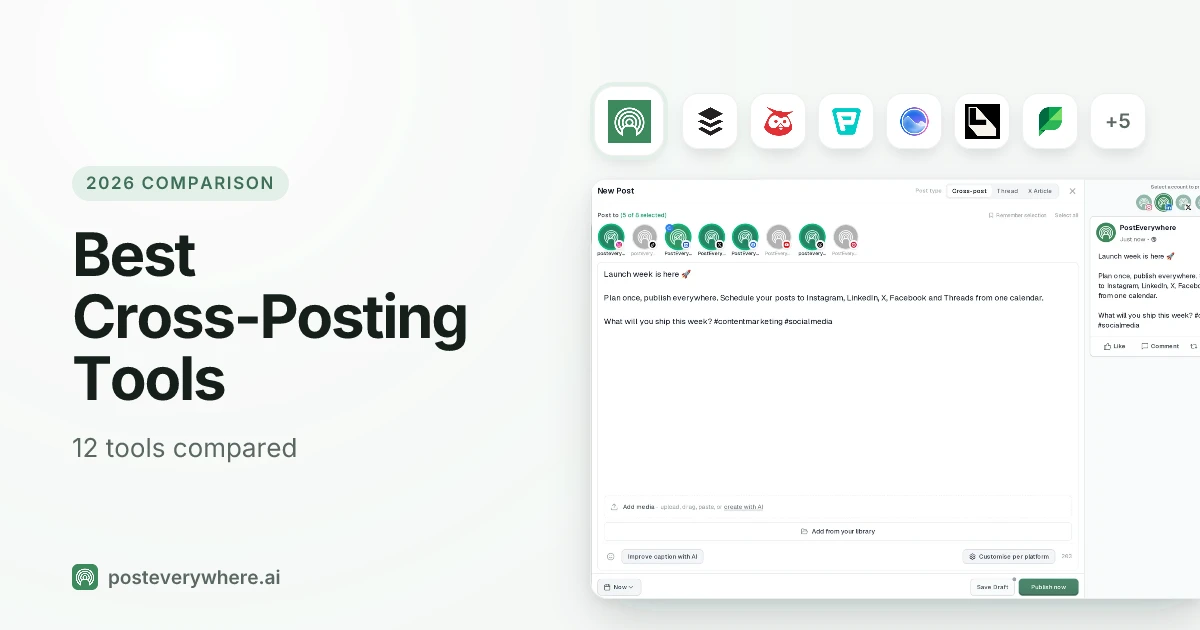
- Best cross-posting tools: tools and workflow for posting to all top platforms at once
Two audiences. One workflow. Zero pasted-and-prayed cross-posts. PostEverywhere posts to LinkedIn, X, Instagram, Facebook, TikTok, YouTube, Threads, and Pinterest from one composer. Start your 7-day trial →

Founder & CEO of PostEverywhere. Writing about social media strategy, publishing workflows, and analytics that help brands grow faster.