Yes—you can schedule YouTube Shorts. In 5 minutes, I'll show you how to schedule Shorts from desktop using YouTube Studio's free scheduler or a faster third-party tool, plus the best times and common pitfalls to avoid.
If you're serious about YouTube Shorts growth, you're filming vertical videos, editing hooks, writing titles, and adding hashtags—all while trying to post at peak times (5-7 PM, 12-2 PM). Manually uploading each Short is time-consuming and inconsistent.
The solution? Learn how to schedule YouTube Shorts in advance. In this guide, I'll show you how to batch schedule Shorts using YouTube Studio (free, desktop-only) and third-party tools that unlock advanced features like cross-platform posting, analytics, and the ability to post to all social media at once — including TikTok, Instagram Reels, and Facebook.
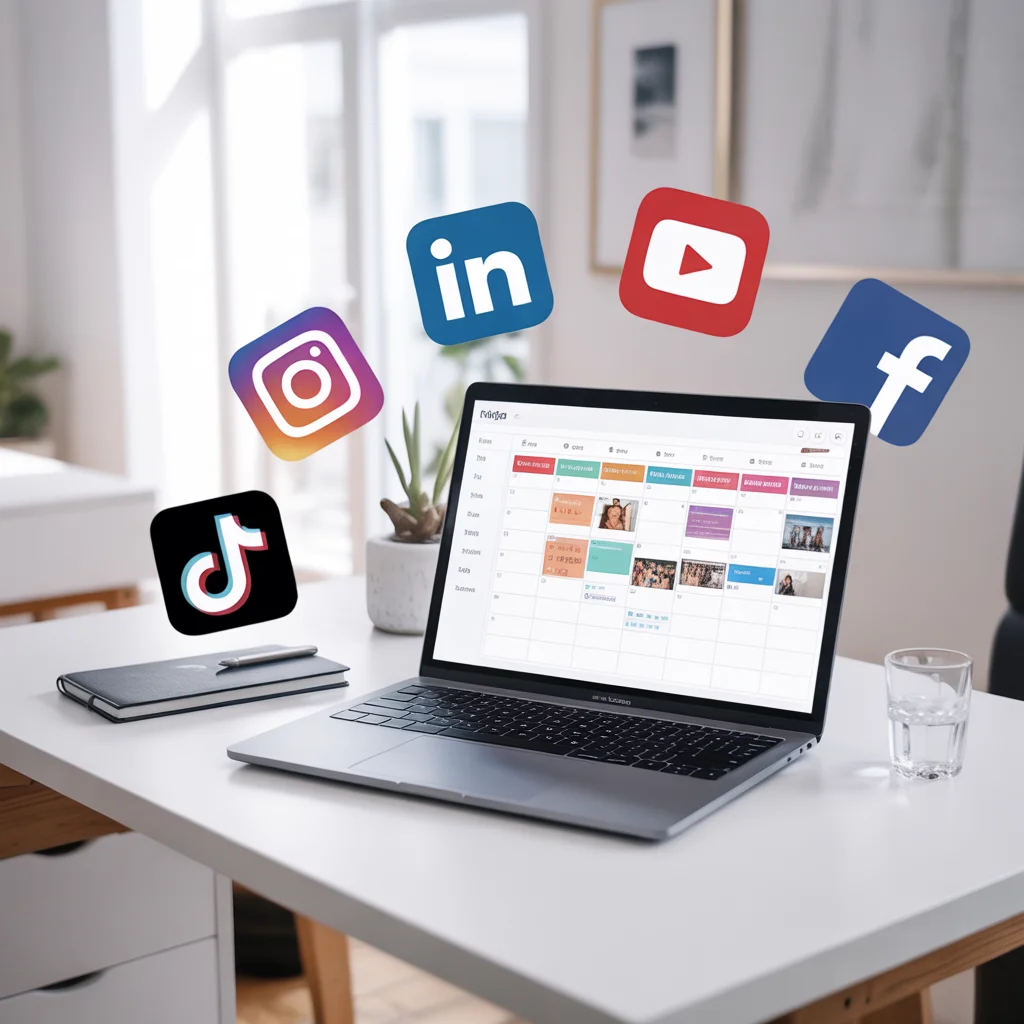
Schedule across all platforms: Use our social media scheduler to manage YouTube, TikTok, Instagram, LinkedIn, Facebook, X, Threads, and Pinterest from one dashboard.
TL;DR
- Yes, you can schedule YouTube Shorts using YouTube Studio (free) or third-party tools
- Schedule from desktop using YouTube Studio or mobile/desktop with advanced tools
- Third-party tools let you batch upload 10-20+ Shorts, schedule across platforms, and see a unified calendar
- AI-powered scheduling auto-generates Short titles, descriptions, tags, and suggests trending topics
- Best times to post YouTube Shorts: 12-2 PM, 5-7 PM, and 8-10 PM in your audience's timezone
- Batch scheduling saves 5-10 hours per week for consistent creators
Quick Jump Links
- Can You Schedule YouTube Shorts? (Yes—Here's How)
- How to Schedule YouTube Shorts From Desktop (Free)
- Schedule Shorts Without YouTube Studio (Third-Party Tools)
- How to Schedule YouTube Shorts (Step-by-Step)
- Best Times to Schedule YouTube Shorts in 2025
- Troubleshooting: Why My Scheduled Short Didn't Post
- YouTube Shorts vs TikTok vs Reels: Scheduling Differences
- Shorts Monetization and Scheduling
- Repurposing TikToks as YouTube Shorts
- YouTube Studio Scheduling vs Third-Party Tools
- Shorts Thumbnails and Titles: Scheduling Tips
- Common Mistakes When Scheduling Shorts
- FAQs: Scheduling YouTube Shorts
Watch: Schedule YouTube Shorts in 60 Seconds
Watch our quick demo: Batch upload YouTube Shorts and schedule them with optimal posting times
Save 5-10 hours weekly: Try PostEverywhere's YouTube scheduler to upload multiple Shorts at once, schedule across platforms, and auto-post at optimal times. Start your free trial →
Why Schedule YouTube Shorts?
According to YouTube's Creator Insider updates and the latest YouTube statistics, creators who post consistently (3-5 Shorts per week) see 2-3x higher subscriber growth rates than sporadic posters. But creating and manually posting daily burns you out fast.
Scheduling YouTube Shorts in advance solves this by letting you:
- Batch your content creation: Film 10 Shorts in one session, edit them in CapCut (and double-check the YouTube Shorts aspect ratio), then schedule for 2 weeks
- Post at optimal times: Your Shorts go live at 6 PM or 9 PM even if you're asleep or in meetings
- Maintain consistency: Never miss a posting day because you're busy, traveling, or out of ideas
- Reduce decision fatigue: Plan your YouTube content calendar once per week instead of scrambling daily
- Focus on quality: Spend less time on logistics, more time on hooks, editing, and audience engagement
For creators posting 5+ Shorts per week, batch scheduling saves 5-10 hours weekly. That's 40+ hours per month you can reinvest in content quality, comment responses, or monetization strategies.
Learn more about social media scheduling strategies.
Can You Schedule YouTube Shorts? (Yes—Here's How)
Yes. YouTube Studio supports scheduling YouTube Shorts from desktop:
- Must upload pre-recorded Shorts (can't use in-app YouTube mobile editing)
- Vertical video format (9:16 ratio) required for Shorts classification
- Up to 60 seconds length maximum for Shorts
- Can add title, description, hashtags (#Shorts is auto-added)
- Cannot add YouTube's trending audio during scheduling (must edit in YouTube mobile app first with audio, save to camera roll, then upload)
Workaround: Edit your Short in the YouTube mobile app with music/audio, save to camera roll, then upload to YouTube Studio for scheduling. You can also use high-quality free stock video as a background for your Shorts if you don't have original footage.
Third-party tools like PostEverywhere work the same way but add batch upload, cross-platform posting to TikTok/Instagram Reels, and unified calendars.
How to Schedule YouTube Shorts From Desktop (Free)
YouTube's native scheduler is called YouTube Studio. It's free and supports scheduling YouTube Shorts from your desktop.
Requirements:
- YouTube channel (any size, even 0 subscribers)
- Desktop or laptop with web browser (mobile YouTube app has limited scheduling)
Steps to Schedule YouTube Shorts From Desktop:
- Open YouTube Studio on desktop
- Click Create → Upload videos
- Select your video file(s) to upload
- Details page:
- Add title (keep it catchy, 60 chars max for mobile display)
- Add description (first 2-3 lines show in feed, make them count)
- Add hashtags (#Shorts is automatically suggested)
- Select thumbnail (choose the most eye-catching frame)
- Audience settings: Select "Not made for kids" or "Made for kids"
- Schedule settings:
- Toggle Schedule (instead of "Public" or "Unlisted")
- Select date and time (can schedule weeks/months ahead)
- Click Schedule
Your Short will auto-publish at the selected time.
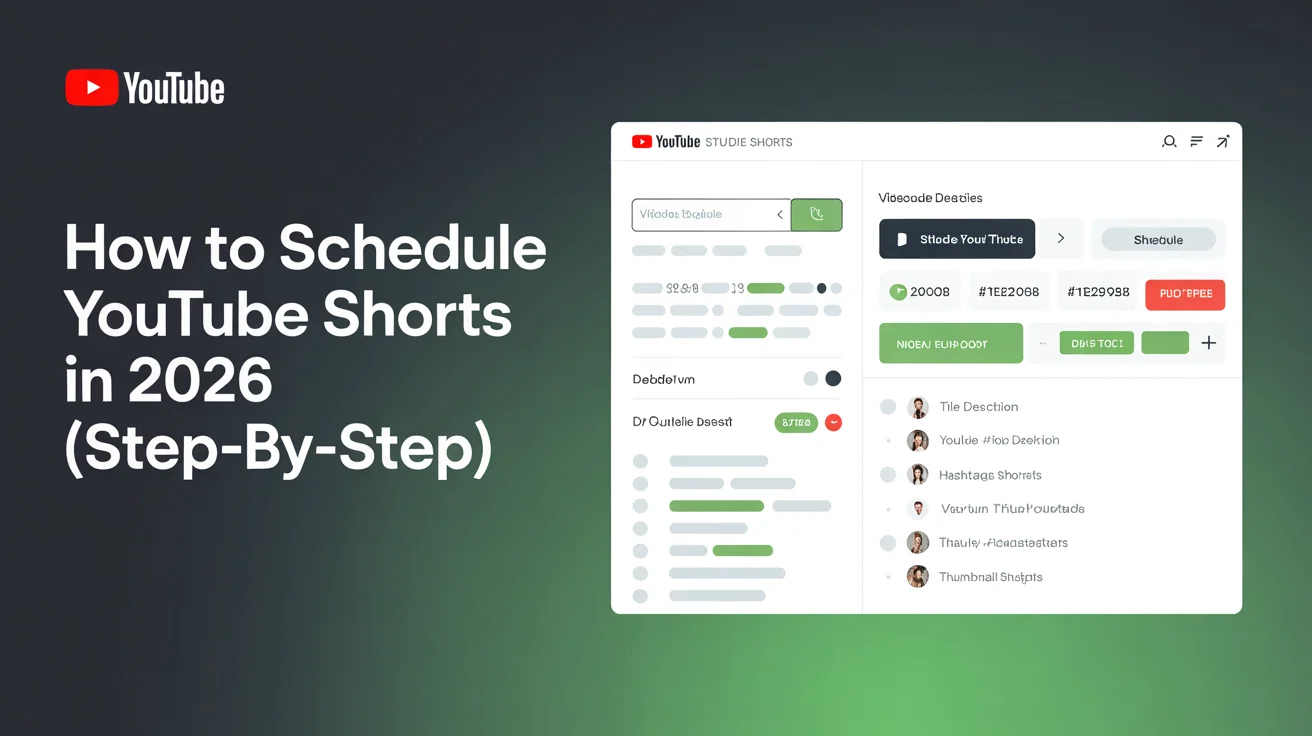 YouTube Studio's free scheduler interface for desktop scheduling
See YouTube's official help guide for more details.
YouTube Studio Limitations
- One video at a time: No batch upload—you must schedule each Short individually
- No scheduling limit: Can schedule months ahead (unlike TikTok's 10-day limit)
- Desktop-only for bulk: Mobile app allows scheduling but no batch upload
- No trending audio library access: Can't access YouTube's trending audio when scheduling (must add audio before upload)
- No unified calendar: Can't see YouTube + TikTok + Instagram Reels in one view
- Limited analytics: Basic insights only; no cross-platform performance comparison
For creators posting 1-3 Shorts per week, YouTube Studio works fine. But if you're posting 5+ times weekly across multiple platforms, you need a third-party tool.
Schedule Shorts Without YouTube Studio (Third-Party Tools)
Third-party YouTube Shorts schedulers unlock features YouTube Studio can't match:
Key advantages:
- Batch upload: Upload 10-20 Shorts at once, schedule them in one session
- Visual content calendar: See your entire YouTube, TikTok, Instagram Reels, and Facebook calendar in one view
- Cross-platform posting: Upload once and auto-post to YouTube Shorts, TikTok, Instagram Reels, and Facebook Reels simultaneously
- Mobile + desktop: Schedule from your phone or computer
- Advanced analytics: Track best posting times, engagement patterns, and cross-platform performance
- Team collaboration: Multiple team members can schedule, approve, and manage content
- Title/description templates: Save reusable templates for faster scheduling
- Automated hashtags: Auto-add #Shorts and relevant hashtags
Popular third-party YouTube schedulers include PostEverywhere, TubeBuddy, and VidIQ.
PostEverywhere stands out because it's built for creators who need to post YouTube Shorts, TikTok videos, Instagram Reels, and Facebook Reels from one workflow—perfect for maximizing reach without duplicate work.
Learn more about cross-platform publishing.
YouTube Scheduler: Studio vs Third-Party (Comparison Table)
| Feature | YouTube Studio (Free) | PostEverywhere (Paid) |
|---|---|---|
| Schedule YouTube Shorts | ✅ Yes | ✅ Yes |
| Batch upload | ❌ No (one at a time) | ✅ Yes (10-20+ videos at once) |
| Scheduling limit | Unlimited (months ahead) | Unlimited (6+ months) |
| Desktop access | ✅ Yes | ✅ Yes |
| Mobile app | Limited (basic upload only) | ✅ Full scheduling |
| Visual calendar | ❌ No unified view | ✅ Yes (multi-platform) |
| Cross-platform posting | ❌ YouTube only | ✅ YouTube, TikTok, Instagram, Facebook, X, LinkedIn |
| Analytics | Basic insights | ✅ Advanced (cross-platform comparison) |
| Best-time suggestions | ❌ No | ✅ Yes (AI-powered) |
| Team collaboration | Limited (channel access) | ✅ Yes (roles, approvals, permissions) |
| Title/description templates | ❌ No | ✅ Yes (reusable, branded) |
| Automated hashtags | ❌ No | ✅ Yes (#Shorts auto-added) |
| Trending audio | ❌ No (add before upload) | ❌ No (edit in-app first) |
| Unified calendar (all platforms) | ❌ No | ✅ Yes |
| Cost | Free | $29-49/month |
| Best for | 1-3 Shorts/week, YouTube-only | 5+ Shorts/week, multi-platform creators |
Bottom line: Use YouTube Studio if you're posting occasionally to YouTube only. Use a third-party scheduler if you're posting 5+ times weekly or managing multiple platforms.
How to Schedule YouTube Shorts (Step-by-Step)
Here's the exact workflow to batch schedule YouTube Shorts:
Step 1: Create Your YouTube Shorts
Film 8-15 Shorts in one batch session:
- Pick a content theme: Educational, entertaining, trending, or behind-the-scenes
- Film vertical (9:16): Use your phone or camera in portrait mode
- Hook in first 3 seconds: Grab attention immediately (Shorts viewers swipe faster than Reels)
- Keep it 15-59 seconds: YouTube Shorts can be up to 60 seconds
- Edit with captions/effects: Use CapCut, Adobe Premiere Rush, or YouTube mobile editor
Pro tip: Film raw footage in batches, then edit later. Filming 10 Shorts back-to-back is faster than filming + editing one at a time. According to HubSpot's video marketing research, batch-creating video content improves consistency by 67%.
Step 2: Open Your YouTube Scheduler
If using YouTube Studio:
- Open YouTube Studio on desktop
- Click Create → Upload videos
If using a third-party tool:
- Log in to your YouTube scheduling tool
- Navigate to "Upload" or "Composer"
- Select Batch Upload (if available) or upload Shorts one-by-one
Step 3: Upload Your Shorts
For YouTube Studio:
- Upload one Short at a time
- Video must be vertical (9:16 ratio) and ≤60 seconds
- YouTube auto-detects Shorts format
For third-party tools:
- Drag and drop 8-15 Shorts into the uploader
- Videos appear in a queue or list view
- Reorder by dragging
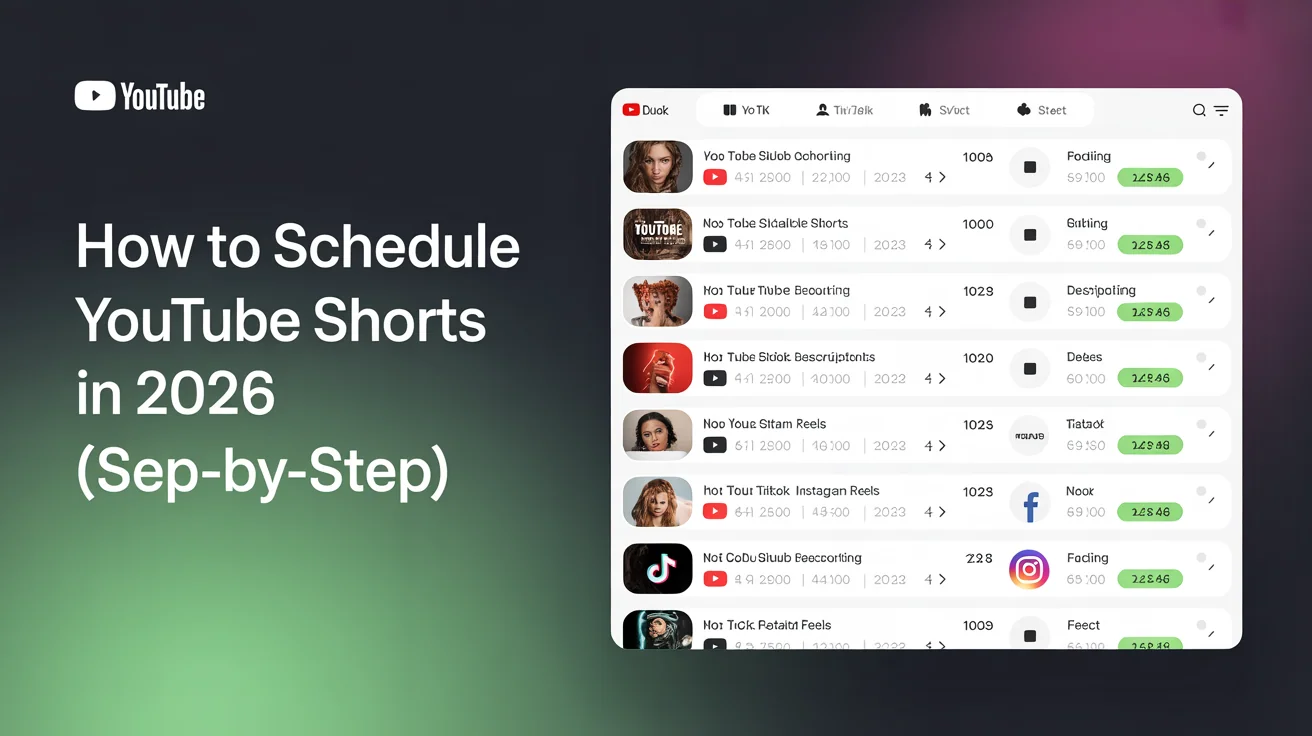 Batch upload interface: Schedule 10+ Shorts in one session with drag-and-drop
Step 4: Add Title, Description, Hashtags, and Settings
For each Short, customize:
- Title: Hook in the first 60 characters (shows on mobile)
- Example: "5 Morning Habits That Changed My Life 🌅"
- Description: First 2-3 lines show in feed (make them count)
- Include timestamps if relevant
- Add 3-5 relevant hashtags (#Shorts is automatically suggested)
- Hashtags: #Shorts (required), plus 2-4 niche hashtags
- Example: #Shorts #MorningRoutine #ProductivityTips #LifeHacks
- Tags: 10-15 back-end video tags pulled from our YouTube tag generator — these are invisible to viewers but help YouTube classify your Short by topic
- Thumbnail: Choose the most eye-catching frame (or upload custom)
- Audience: Select "Not made for kids" or "Made for kids"
Pro tip: Save title/description templates for recurring content types:
[Catchy hook in first 60 chars] 🔥

[3-5 lines explaining the value]

Follow for more [niche] tips!

#Shorts #hashtag1 #hashtag2 #hashtag3
Step 5: Set Posting Times
Research from VidIQ's analysis shows YouTube Shorts' highest engagement times are:
- 12-2 PM (lunch break scrolling)
- 5-7 PM (after work/school)
- 8-10 PM (evening prime time)
Strategy 1: Consistent cadence Post at the same time every day (e.g., 6 PM daily). This trains your audience to expect new content.
Strategy 2: Peak-time targeting Schedule all Shorts for 6-7 PM when YouTube Shorts usage peaks.
Strategy 3: Test and optimize Rotate posting times for 2 weeks, then analyze which windows get the most views in the first hour.
Use a content calendar to visualize your schedule and avoid gaps.
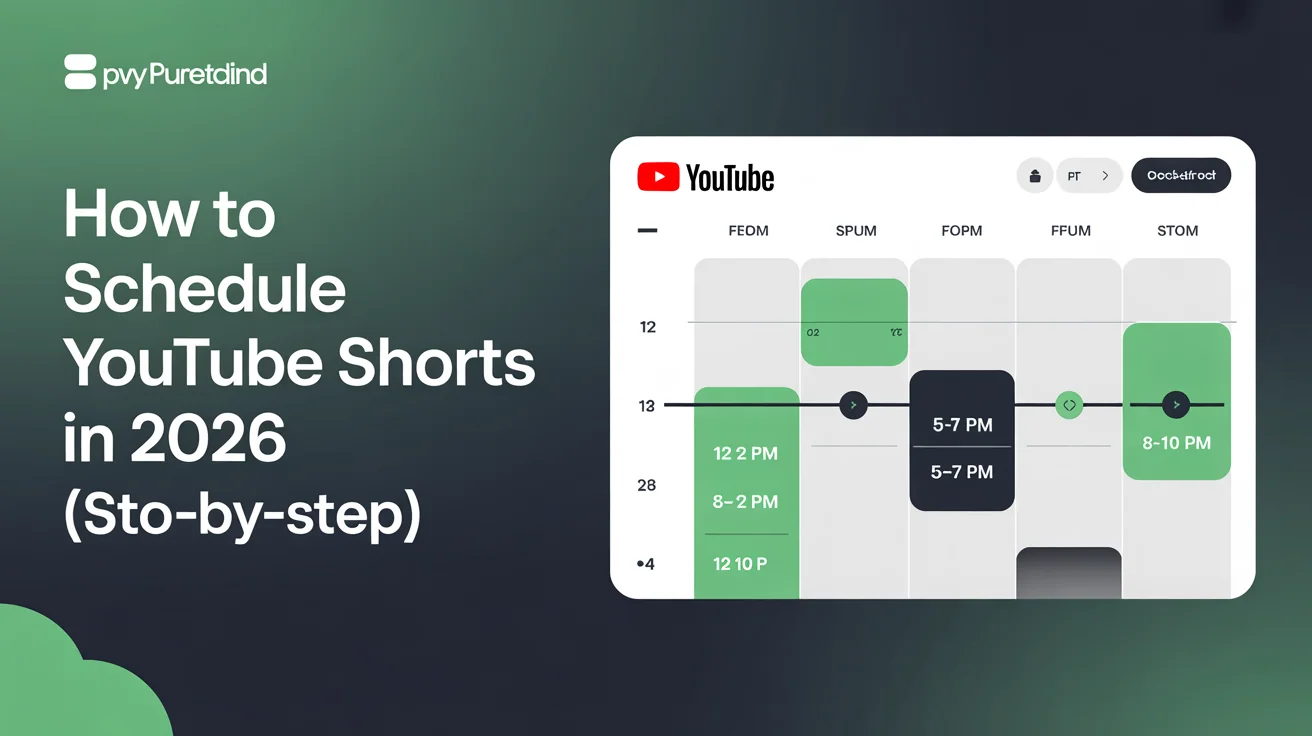 Visual content calendar: See all scheduled Shorts at a glance with optimal posting times
Need a visual calendar? PostEverywhere's content calendar shows all your scheduled YouTube Shorts, TikToks, and Instagram Reels in one view. Drag-and-drop to reschedule. Try it free →
Step 6: Review and Confirm
Before finalizing:
- Check your calendar view: Make sure you don't have gaps or double-posts
- Preview each Short: Ensure titles, thumbnails, and videos are correct
- Verify posting times: Double-check timezones (especially if traveling)
- Hit "Schedule All" (third-party tools) or confirm each individually (YouTube Studio)
Done. Your YouTube Shorts will auto-publish at the scheduled times—no further action needed.
Best Times to Schedule YouTube Shorts in 2025
According to TubeRanker's research and YouTube Creator Academy, optimal YouTube Shorts posting times vary by audience demographics and industry:
General Best Times (US Audience)
| Day | Best Times (ET) |
|---|---|
| Monday | 12 PM, 6 PM, 9 PM |
| Tuesday | 12 PM, 5 PM, 8 PM |
| Wednesday | 1 PM, 6 PM, 9 PM |
| Thursday | 12 PM, 5 PM, 8 PM |
| Friday | 12 PM, 3 PM, 7 PM |
| Saturday | 11 AM, 2 PM, 8 PM |
| Sunday | 12 PM, 3 PM, 7 PM |
By Content Type
- Shorts: 5-7 PM and 8-10 PM (highest engagement; people watch Shorts before bed)
- Cross-post to Instagram Reels: Same times work (7-9 PM peak)
- Cross-post to TikTok: Similar audience behavior (6-9 PM, 12-3 PM)
By Industry/Niche
- Gaming: 3-9 PM (after school/work)
- Education/How-To: 12-2 PM and 7-9 PM (lunch + evening learning)
- Comedy/Entertainment: 7-11 PM (evening relaxation)
- Fitness/Health: 5-7 AM and 5-8 PM (workout times)
- Finance/Business: 7-9 AM and 12-2 PM (morning routine + lunch)
Pro tip: Use YouTube Analytics to analyze when your audience is most active. Go to YouTube Studio → Analytics → Audience → "When your viewers are on YouTube".
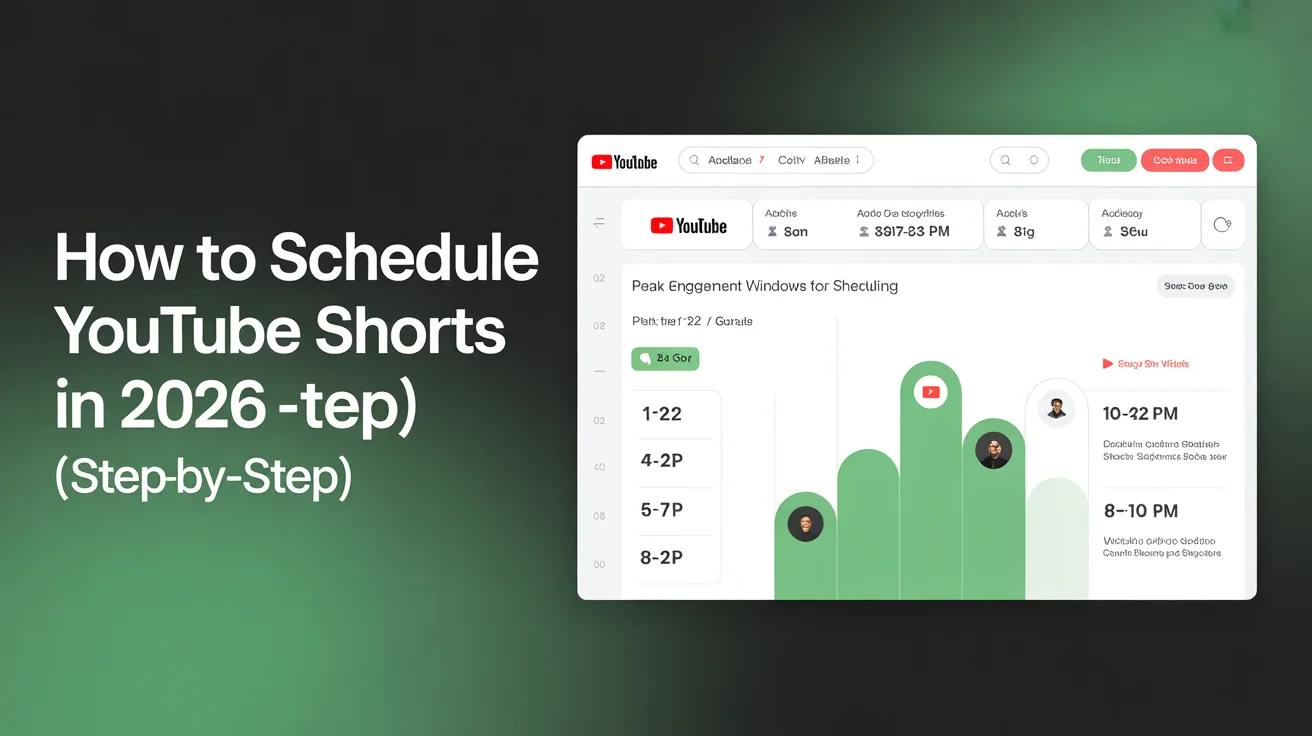 Use YouTube Analytics to find your audience's most active times for optimal scheduling
Use smart scheduling tools to auto-select optimal times based on your audience's past engagement.
Read our comprehensive guide: Optimal Time to Schedule Social Media Posts for data-backed timing strategies across all platforms.
YouTube Scheduling Best Practices
1. Post 3-5 Shorts Per Week
YouTube's algorithm favors consistent creators. Research from VidIQ shows posting 3-5 Shorts weekly maintains momentum without overwhelming your audience.
Recommended schedule:
- 3-5 Shorts per week
- Cross-post to Instagram Reels and TikTok for maximum reach
- Mix educational, entertaining, and trending content
2. Batch Create Every Week
Film 8-15 Shorts in one 2-hour session, then schedule them across 7-14 days. This keeps you consistent even during busy weeks.
3. Optimize Titles for Mobile Display
YouTube Shorts titles truncate at 60 characters on mobile. Front-load your hook:
- ❌ "In this video, I'm going to show you 5 morning habits that changed my life"
- ✅ "5 Morning Habits That Changed My Life 🌅"
4. Use First-Hour Engagement Boosters
The first hour after posting determines whether YouTube pushes your Short to more viewers. Strategies:
- Schedule Shorts when your audience is most active (check Analytics)
- Reply to comments within the first 30 minutes
- Share to Community tab immediately after posting
- Pin a comment asking a question to encourage engagement
5. Cross-Post Shorts to TikTok, Instagram Reels, Facebook
Why limit your Shorts to YouTube? The same vertical video works on TikTok, Instagram Reels, and Facebook Reels. Use a cross-platform scheduler to publish everywhere at once. For the complete vertical-video distribution strategy, see our walkthrough on cross-posting Reels, Shorts, and TikTok at the same time.
Pro tip: Customize titles per platform. YouTube: SEO-optimized. TikTok: short + trending. Instagram: casual + hashtags.
Similar to how to schedule Instagram Reels, cross-platform posting multiplies your reach without extra work.
6. Add #Shorts Hashtag (Auto-Suggested)
YouTube automatically suggests #Shorts for vertical videos under 60 seconds. Always accept this suggestion—it signals to YouTube that your video is a Short, not a traditional vertical video.
7. Review Analytics Weekly
Check YouTube Studio Analytics to see which Shorts performed best:
- Views: Total views and average view duration
- Engagement: Likes, comments, shares
- Watch time: Average percentage viewed
Create more content in the style/format that performs best.
Common YouTube Scheduling Mistakes to Avoid
1. Posting Too Many Shorts at Once
Don't schedule 5 Shorts to post in one day. YouTube's algorithm may not promote all of them. Space Shorts at least 4-6 hours apart.
2. Ignoring Time Zones
If your audience is in EST but you're in PST, make sure your scheduler accounts for timezone differences. Posting at "6 PM" in the wrong timezone means your content drops at 3 PM or 9 PM instead.
3. Using Low-Quality Exports
Shorts compressed through multiple edits look blurry. Export at highest quality from your editing app:
- Resolution: 1080x1920 (9:16 ratio) minimum
- Frame rate: 30 FPS minimum (60 FPS preferred)
- Bitrate: High quality
For the full specs across YouTube, TikTok, Instagram Reels, and more, see our social media image sizes guide.
4. Not Customizing Titles for Each Platform
If you're cross-posting to TikTok, Instagram Reels, or Facebook, customize:
- YouTube: SEO-optimized title (searchable keywords)
- TikTok: Short caption, trending hashtags
- Instagram: Casual + 3-5 hashtags
- Facebook: Community-first tone
5. Forgetting to Save Drafts
If you're interrupted while scheduling, save your work as a draft in YouTube Studio. Losing a fully written title/description is frustrating.
6. Scheduling Without Thumbnails
Even Shorts benefit from custom thumbnails (shows in browse/search). Choose the most eye-catching frame or create a custom thumbnail with text overlay.
Troubleshooting: Why My Scheduled Short Didn't Post
If your scheduled YouTube Short or video didn't publish at the scheduled time, here are the most common issues and fixes:
Issue 1: Video Still Processing
Problem: YouTube needs time to process videos, especially high-quality 1080p Shorts. If you schedule too soon after upload, the video may not finish processing.
Solution:
- Upload at least 1-2 hours before scheduled publish time
- Wait for "Processing complete" notification before scheduling
- For batch uploads, upload all videos first, then schedule them the next day
Issue 2: Copyright Claim
Problem: If your Short contains copyrighted music/audio, YouTube may block or delay publication.
Solution:
- Use YouTube's Audio Library (royalty-free music)
- Use original audio or royalty-free tracks from CapCut, Epidemic Sound
- Check YouTube Studio → Content for copyright claims before scheduling
- If claimed, dispute (if fair use) or replace audio
Issue 3: Video Not 9:16 Ratio
Problem: YouTube Shorts must be vertical (9:16 aspect ratio). Horizontal or square videos won't qualify as Shorts.
Solution:
- Export videos at 1080x1920 resolution
- Use a video editor to convert landscape to portrait
- Add black bars or blur background if needed
- Verify aspect ratio before uploading
Issue 4: Time Zone Mismatch
Problem: Your YouTube account timezone doesn't match your intended posting timezone.
Solution:
- Check your YouTube account timezone: Settings → General → Country
- Verify scheduler shows correct local time
- When scheduling, YouTube Studio displays time in YOUR account timezone
- Double-check AM/PM when scheduling
Issue 5: Content Policy Violation
Problem: If YouTube detects policy violations (spam, misleading, etc.), it may prevent scheduled publication.
Solution:
- Review YouTube's Community Guidelines
- Check YouTube Studio → Content for policy warnings
- Avoid misleading thumbnails, clickbait titles, or spam content
- Appeal if you believe it's a false positive
Issue 6: File Size Too Large
Problem: YouTube has upload limits (128 GB or 12 hours, whichever is less).
Solution:
- Compress video using Handbrake or Adobe Media Encoder
- Reduce bitrate while maintaining quality
- Keep Shorts under 60 seconds (file size is rarely an issue for Shorts)
Issue 7: Account Not Verified
Problem: Unverified YouTube accounts have upload restrictions.
Solution:
- Verify your YouTube account: youtube.com/verify
- Provide phone number for verification
- Wait 24 hours after verification for full features
Still having issues? Check YouTube Help Center or contact YouTube Creator Support.
Getting Started Checklist (10 Steps)
Ready to start batch scheduling YouTube Shorts? Follow this checklist:
- Create/verify your YouTube channel — Required for uploading and scheduling
- Choose your scheduling tool — YouTube Studio (free, desktop) or third-party (PostEverywhere)
- Audit your content pillars — Define 3-5 recurring content themes (tips, entertainment, trends, educational)
- Film 8-15 Shorts in one batch — Set aside 1-2 hours for filming vertical videos
- Edit with hooks in first 3 seconds — Grab attention immediately (Shorts viewers swipe fast)
- Write title templates — Save 3-5 reusable templates (60 chars max, front-load hook)
- Upload all content to scheduler — Batch upload or one-by-one depending on tool
- Add #Shorts + niche hashtags — #Shorts is required, plus 2-4 relevant hashtags
- Schedule at optimal times — Use best times data (12-2 PM, 5-7 PM, 8-10 PM) or test 3-5 windows
- Review and confirm your calendar — Check for gaps, overlaps, and timezone accuracy
Pro tip: Start with 5 Shorts scheduled over 1 week. Once comfortable, scale to 10-15 Shorts per 2 weeks.
YouTube Shorts vs TikTok vs Reels: Scheduling Differences
If you're posting vertical video across multiple platforms, you need to understand the technical differences that affect scheduling. These aren't interchangeable formats — each platform has quirks that can tank your content if you ignore them.
Format Specs Comparison
| Spec | YouTube Shorts | TikTok | Instagram Reels | Facebook Reels |
|---|---|---|---|---|
| Max duration | 60 seconds | 10 minutes | 90 seconds | 90 seconds |
| Aspect ratio | 9:16 (strict) | 9:16 (flexible) | 9:16 (recommended) | 9:16 (recommended) |
| Resolution | 1080x1920 | 1080x1920 | 1080x1920 | 1080x1920 |
| Max file size | 128 GB | 287 MB (mobile), 10 GB (desktop) | 4 GB | 4 GB |
| Scheduling limit | Unlimited | 10 days ahead | 75 days ahead | 75 days ahead |
| Native batch upload | No | No | No | No |
| Audio library in scheduler | No | Limited | No | No |
Audio Limitations Matter Most
The biggest scheduling difference is audio access. YouTube's trending audio library is only available in the mobile app — you cannot add trending sounds when scheduling from YouTube Studio or any third-party tool. TikTok's desktop uploader also restricts audio library access. Instagram lets you add audio in the app but not through scheduled posts via the API.
Practical implication: If your content strategy relies on trending audio, you must edit with audio first (in the mobile app), save to camera roll, then upload the finished file to your scheduler. This adds a step to your workflow but keeps your content eligible for trending audio boosts.
Hashtag Differences
- YouTube Shorts: #Shorts is auto-suggested and essential for Shorts shelf placement. Add 2-4 niche hashtags in the description. Hashtags go in the description, not the title.
- TikTok: Hashtags go in the caption. Use 3-5 trending + niche hashtags. TikTok's algorithm weighs hashtags more heavily for discoverability than YouTube does.
- Instagram Reels: Hashtags in the caption (up to 30, but 5-10 is optimal). Reels with too many hashtags can look spammy.
Cross-Posting Considerations
When you cross-post vertical video across platforms, customize per platform rather than posting identical content everywhere. At minimum, change the caption and hashtags. Ideally, adjust hooks too — YouTube Shorts viewers tolerate slightly longer intros (2-3 seconds) while TikTok users swipe within the first second. Our broader cross-posting on social media guide breaks down which formats benefit most from per-platform customization.
Use a tool that lets you post to all social media at once while customizing captions per platform, rather than uploading the same file with the same caption everywhere.
Shorts Monetization and Scheduling
A common concern: does scheduling YouTube Shorts affect your monetization or algorithmic reach? The short answer is no — but the details matter.
YouTube Partner Program and Shorts
As of 2026, YouTube Shorts monetization works through the YouTube Partner Program (YPP). To qualify for Shorts monetization, you need either 1,000 subscribers + 10 million Shorts views in 90 days, or 1,000 subscribers + 4,000 watch hours on long-form content.
Scheduled Shorts count toward these thresholds identically to manually posted Shorts. YouTube's system does not distinguish between scheduled and live-published content — the publish timestamp is what matters for algorithmic evaluation.
How Shorts Revenue Works
Shorts revenue comes from ads displayed between Shorts in the Shorts feed. Revenue is pooled across all Shorts creators and distributed based on your share of total Shorts views. This means your per-Short revenue depends on total platform ad spend, not just your individual performance.
Scheduling tip: Because Shorts revenue is pool-based, consistency matters more than any single viral hit. Scheduling 4-5 Shorts per week at optimal times builds a steady view count that compounds your share of the revenue pool over time. Sporadic posting — even if one Short goes viral — produces less reliable income.
Does Scheduling Hurt Algorithmic Reach?
No. YouTube has confirmed that scheduling does not penalize content in the algorithm. The algorithm evaluates watch time, click-through rate, and engagement after the Short goes live, regardless of how it was published.
However, scheduling at the right time does affect initial performance. A Short that goes live at 3 AM when your audience is asleep will get fewer first-hour views, which can reduce the algorithmic push. Use YouTube Analytics to find your audience's peak activity windows, then schedule accordingly.
Maximize Shorts revenue: Use PostEverywhere's YouTube scheduler to schedule Shorts at your audience's peak times automatically. AI-powered time suggestions analyze your past performance to find the windows that drive the most views. Start your free trial -->
Repurposing TikToks as YouTube Shorts
Cross-posting TikTok videos to YouTube Shorts is one of the highest-ROI content strategies in 2026. You already made the video — why not double your reach? But there's a catch: the TikTok watermark.
Why the TikTok Watermark Kills Your Shorts
YouTube's algorithm actively depresses content with visible watermarks from competing platforms. YouTube's own creator liaison has acknowledged that recycled content with watermarks may receive reduced recommendations. In practice, Shorts with a TikTok watermark get significantly fewer impressions on the Shorts shelf. We've put together a dedicated walkthrough on posting TikTok to YouTube Shorts and another on removing the TikTok watermark before posting that cover the cleanup process in detail.
Step-by-Step: Remove the TikTok Watermark
Here's the workflow that keeps your content clean and schedule-ready:
Save the original video before posting to TikTok. This is the simplest approach. After editing in CapCut, Premiere Rush, or any editor, export the final file to your camera roll before uploading to TikTok. You now have a clean master file with no watermark.
If you already posted to TikTok first, download your video from TikTok (it will have the watermark), then use a watermark removal tool. Options include:
- SnapTik or SaveTT (free web tools — paste TikTok URL, download without watermark)
- CapCut's crop/resize tool (crop out the watermark area, though this loses some frame)
- Re-export from your editing timeline (best quality — go back to your project file and export again)
Upload the clean file to your YouTube scheduler. Whether you use YouTube Studio or a third-party YouTube scheduler, upload the watermark-free version.
Customize for YouTube. Don't just repost with the same caption. Adjust:
- Title: Make it SEO-friendly (YouTube is a search engine, TikTok is not)
- Description: Add keywords, timestamps, and relevant links
- Hashtags: Replace TikTok-style hashtags with YouTube-optimized ones (#Shorts + niche tags)
Schedule with a 24-48 hour delay. Give TikTok the first-mover advantage (its algorithm rewards early engagement), then publish the same content on YouTube Shorts a day or two later. This avoids duplicate content issues and lets each platform's algorithm evaluate the content independently.
Batch Workflow for Cross-Posting
For creators producing 5+ videos per week, the most efficient workflow is:
- Batch film 10-15 vertical videos
- Batch edit in CapCut or Premiere Rush
- Export all finished files to a cloud folder (Google Drive, Dropbox)
- Upload to a cross-platform scheduler that supports YouTube, TikTok, Instagram, and Facebook
- Customize captions per platform, set posting times, and schedule everything in one session
This approach using a tool like PostEverywhere's TikTok scheduler alongside the YouTube scheduler means you handle content distribution once per week instead of manually posting every day.
YouTube Studio Scheduling vs Third-Party Tools
YouTube Studio is free, native, and reliable. So why would you pay for a third-party scheduling tool? Here's an honest breakdown of when each option makes sense.
When YouTube Studio Is Enough
YouTube Studio works perfectly if you:
- Post only to YouTube (no TikTok, Instagram, or Facebook)
- Schedule 1-3 Shorts per week
- Don't need batch upload (you're fine uploading one at a time)
- Don't need a visual content calendar
- Work solo (no team approvals or collaboration needed)
YouTube Studio's scheduler is straightforward: upload, add details, toggle "Schedule," pick a date and time. It's reliable and has no learning curve. For YouTube-only creators posting a few times per week, it's genuinely all you need.
When Third-Party Tools Are Worth It
A third-party scheduler becomes essential when you:
- Post across 3+ platforms: Managing YouTube Studio, TikTok's scheduler, Meta Business Suite, and LinkedIn separately is a time sink. A unified tool like PostEverywhere puts everything in one dashboard.
- Post 5+ times per week: Uploading and scheduling each Short individually in YouTube Studio takes 5-8 minutes per video. At 5 Shorts/week across 3 platforms, that's 75-120 minutes of scheduling alone. Batch upload cuts this to 15-20 minutes.
- Need a visual calendar: YouTube Studio shows a list of scheduled content. Third-party tools show a drag-and-drop content calendar where you can see gaps, move posts, and plan weeks in advance.
- Work with a team: If a client, manager, or collaborator needs to approve content before it goes live, third-party tools offer approval workflows that YouTube Studio lacks.
- Want AI-assisted optimization: Tools with AI content generation can suggest titles, write descriptions, and recommend posting times based on your historical data.
The Hybrid Approach
Many creators use both. They schedule YouTube-only content (like long-form videos) in YouTube Studio, and use a third-party tool specifically for Shorts that are cross-posted to TikTok and Reels. This keeps costs down while still benefiting from cross-platform scheduling where it matters most.
Shorts Thumbnails and Titles: Scheduling Tips
Shorts thumbnails and titles work differently than regular YouTube videos. When scheduling, these details are easy to overlook but they directly affect click-through rate in browse and search results.
Custom Thumbnails for Shorts
YouTube rolled out custom thumbnail support for Shorts in 2023. When scheduling, you can select a frame from the video or upload a custom thumbnail image. Here's what matters:
- Shorts shelf: Custom thumbnails do NOT show in the vertical Shorts feed (viewers see the video playing automatically). But they DO appear when your Short surfaces in search results, the Subscriptions tab, and browse features on desktop.
- Recommended size: 1280x720 pixels (16:9) — yes, even for vertical Shorts, the thumbnail displays in 16:9 format in search and browse.
- What to include: A clear, high-contrast image with minimal text (1-3 words max). Faces with expressive emotions outperform text-only thumbnails by a wide margin.
Scheduling tip: When batch scheduling, create thumbnails in advance using Canva or Photoshop. Upload them during the scheduling session rather than relying on auto-generated frames, which are often mid-motion blurs.
Title Optimization for Shorts
YouTube Shorts titles truncate differently depending on where they appear:
- Shorts feed (mobile): Titles show below the video, truncated at roughly 50-60 characters
- Search results: Full title displays (up to 100 characters)
- Browse/home page: Truncated at roughly 60 characters
Best practices when scheduling titles:
- Front-load the hook: Put the most compelling words in the first 40 characters. "5 Excel tricks nobody taught you" beats "Things nobody taught you about Excel — 5 tricks."
- Include searchable keywords: Unlike TikTok, YouTube is a search engine. Titles like "How to remove background in Canva" capture search traffic that purely clever titles miss.
- Skip clickbait on Shorts: Shorts auto-play in the feed, so the hook in your video matters more than the title. Titles mainly affect search and browse discovery.
- Avoid all-caps: YouTube's algorithm can flag all-caps titles as clickbait, reducing recommendations.
When batch scheduling, write all your titles in a spreadsheet first, check character counts, and then paste them into your scheduler. This prevents truncation surprises.
Common Mistakes When Scheduling Shorts
Beyond the general scheduling mistakes covered earlier, these are Shorts-specific errors that waste your content or reduce reach.
1. Wrong Aspect Ratio (Not Strictly 9:16)
YouTube classifies a video as a Short based on aspect ratio and duration. If your video is 1:1 (square), 4:5, or landscape, it won't appear in the Shorts shelf — it'll be treated as a regular video. Always export at exactly 1080x1920 pixels (9:16). Even 1080x1890 can cause issues.
Check before scheduling: Preview your file dimensions in your file manager or video editor. On Mac, right-click > Get Info. On Windows, right-click > Properties > Details.
2. Duration Over 60 Seconds
YouTube Shorts must be 60 seconds or under. A video that's 61 seconds becomes a regular video — it won't show in the Shorts feed, won't get Shorts recommendations, and won't count toward Shorts monetization thresholds. When batch editing, double-check every file's duration before uploading to your scheduler.
3. Visible Watermarks from Other Platforms
As covered above, TikTok watermarks suppress your Shorts performance. But this also applies to CapCut watermarks (from the free tier), stock footage watermarks, and any other branding overlays. YouTube's system detects these and may reduce recommendations. Always use watermark-free exports.
4. Missing the #Shorts Hashtag
While YouTube has gotten better at auto-detecting Shorts based on aspect ratio, including #Shorts in your description remains a best practice. It's an explicit signal that ensures your content is categorized correctly. When scheduling through third-party tools, verify that #Shorts is included — some tools don't auto-add it the way YouTube Studio does.
5. Scheduling Too Many Shorts Back-to-Back
Posting 3-5 Shorts within an hour cannibalizes your own reach. YouTube's algorithm typically promotes one piece of content at a time from a channel. Space your Shorts at least 4-6 hours apart. When setting up your batch schedule, stagger posting times across the day rather than clustering them.
6. Ignoring Shorts-Specific Analytics After Publishing
A common post-scheduling mistake: checking your regular YouTube Analytics dashboard but not drilling into Shorts-specific metrics. Go to YouTube Studio > Analytics > Content > Shorts to see metrics that matter for Shorts: swipe-away rate, average view duration relative to Short length, and Shorts feed impressions. These tell you what to schedule more of — and what to stop making. Track these alongside your broader YouTube KPIs for a complete picture.
FAQs: Scheduling YouTube Shorts
Can you schedule YouTube Shorts?
Yes. You can schedule Shorts in YouTube Studio or via third-party tools like PostEverywhere. Upload a 9:16 video (≤60s), add title/description/hashtags, and set a scheduled publish time. Note: You can't access YouTube's trending audio library when scheduling—edit Shorts with audio in the YouTube mobile app first, then upload to YouTube Studio.
How do I schedule YouTube Shorts from desktop?
Use YouTube Studio on desktop: Create → Upload videos → select your Short (9:16 vertical video, max 60s) → add title/description/hashtags → toggle "Schedule" (instead of Public) → select date/time → Schedule. It's free. Third-party tools add batch upload and cross-posting to TikTok, Instagram Reels, and Facebook Reels simultaneously.
Why didn't my scheduled Short post?
Common issues: video still processing, copyright claim, video not 9:16 ratio, timezone mismatch, or content policy violation. Upload at least 1-2 hours before scheduled time, use royalty-free audio, verify video is vertical (1080x1920), and check YouTube Studio for any warnings or claims.
Can I batch schedule YouTube Shorts?
Not natively. YouTube Studio requires you to schedule each Short individually. Third-party tools like PostEverywhere let you batch upload 10-20 Shorts at once and schedule them in one session, saving hours.
How far in advance can I schedule YouTube Shorts?
YouTube Studio: unlimited (can schedule months ahead). Third-party tools: typically 6+ months ahead. Unlike TikTok's 10-day limit or Instagram's 75-day limit, YouTube has no scheduling cap.
Does scheduling YouTube Shorts hurt views?
No. Scheduled Shorts perform the same as manually posted content. YouTube's algorithm doesn't penalize scheduling—it only cares about watch time, engagement (likes, comments, shares), and retention. Scheduling actually helps by ensuring you post at optimal times.
What's the best time to post YouTube Shorts?
Peak times are 12-2 PM, 5-7 PM, and 8-10 PM in your audience's timezone. Use YouTube Analytics to check when your specific audience is most active (YouTube Studio → Analytics → Audience → "When your viewers are on YouTube"), then test 3-5 time slots over 2 weeks.
Can I schedule Shorts to multiple platforms at once?
Yes! Third-party schedulers like PostEverywhere let you upload once and auto-post to YouTube Shorts, TikTok, Instagram Reels, and Facebook Reels simultaneously. This saves hours and maximizes reach without duplicate work.
How often should I post Shorts on YouTube?
Aim for 3-5 Shorts per week. Consistent posting (3-5x/week) outperforms sporadic posting (daily for 3 days, then nothing for 2 weeks). YouTube's algorithm rewards consistent upload schedules.
Do I need to add #Shorts hashtag?
YouTube automatically suggests #Shorts for vertical videos under 60 seconds. Always accept this—it signals to YouTube that your video is a Short, which affects how it's distributed (Shorts shelf, Shorts feed). You can add 2-4 additional niche hashtags.
Can I edit or delete a scheduled YouTube Short?
Yes. In YouTube Studio, go to Content → Scheduled → Click the video → Edit details or Delete. You can modify title, description, hashtags, thumbnail, or posting time anytime before it publishes. Third-party tools have similar interfaces for managing scheduled content.
How long can YouTube Shorts be?
YouTube Shorts can be up to 60 seconds. Videos longer than 60 seconds won't qualify as Shorts (even if vertical). Keep it under 60 seconds to ensure your video appears in the Shorts shelf and Shorts feed.
References (Authoritative Sources)
Platform Documentation:
- YouTube Help Center - Upload & Schedule Videos
- YouTube Creator Academy - Shorts Best Practices
- YouTube Studio Guide
- TikTok Creator Portal
- Instagram Business Blog - Reels
Industry Research & Statistics:
- VidIQ: Best Time to Post YouTube Shorts
- TubeRanker: YouTube Shorts Optimization
- YouTube Creator Insider Channel
- HubSpot: Video Marketing Statistics
Next Steps
Ready to schedule YouTube Shorts and save 5-10 hours every week?
- Free option: Use YouTube Studio for basic scheduling (desktop, one Short at a time)
- Advanced option: Try PostEverywhere's YouTube scheduler for batch upload, mobile + desktop scheduling, and cross-platform posting
- AI-powered: Use AI social media scheduler to auto-generate Short titles, descriptions, and SEO-optimized tags
- Optimize link sharing: Preview how YouTube links appear on social media with our free OG image checker
- Learn more: How to schedule Instagram Reels to maximize reach across vertical video platforms
- Get started: See pricing to start your 7-day free trial
Pro tip: The creators who win on YouTube Shorts aren't the ones who film daily—they're the ones who batch-create, schedule smart, and stay consistent without burning out. Master scheduling, and you'll have more time for the creative work that actually grows your channel.
Reviewed by Jamie Partridge, Founder of PostEverywhere

Founder & CEO of PostEverywhere. Writing about social media strategy, publishing workflows, and analytics that help brands grow faster.